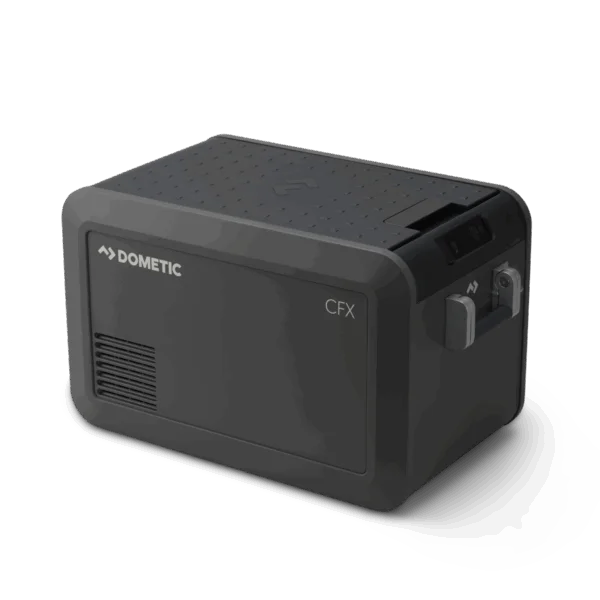
18/20
Dometic CFX5 35 (18/20)
The one I'd buy with my own money — the benchmark every other 12V cooler gets measured against.
C$1,307.20Checked Oct 6Check price
Guide
Compressor vs thermoelectric, sizing, battery drain, and what really happens at -40°C.
Updated October 5, 2026
The 12V cooler aisle is where good money goes to die. Two technologies, three dozen brands, and marketing that promises "freezer-grade" from a unit that can't hold 4°C in July. Here's what actually matters, stripped of the brochure talk.
This is the only decision that really matters. A compressor cooler works like your home fridge — it can genuinely freeze, holds temperature in heat, and sips power once it's at temp. A thermoelectric cooler can only cool ~20°C below ambient. Parked in 35°C sun, that's 15°C inside — warm yogurt territory.
Thermoelectric has one virtue: it's cheap and has no moving compressor to fail. For keeping drinks cool on mild days, it's fine. For food safety on a summer run, it's not.
For one driver eating mostly from the cooler: 25–35L covers a week of food. Team drivers or anyone meal-prepping hard should look at 40–55L. Bigger isn't just heavier — it draws more power per cooling cycle and eats cab space you'll miss.
The one I'd buy with my own money — the benchmark every other 12V cooler gets measured against.
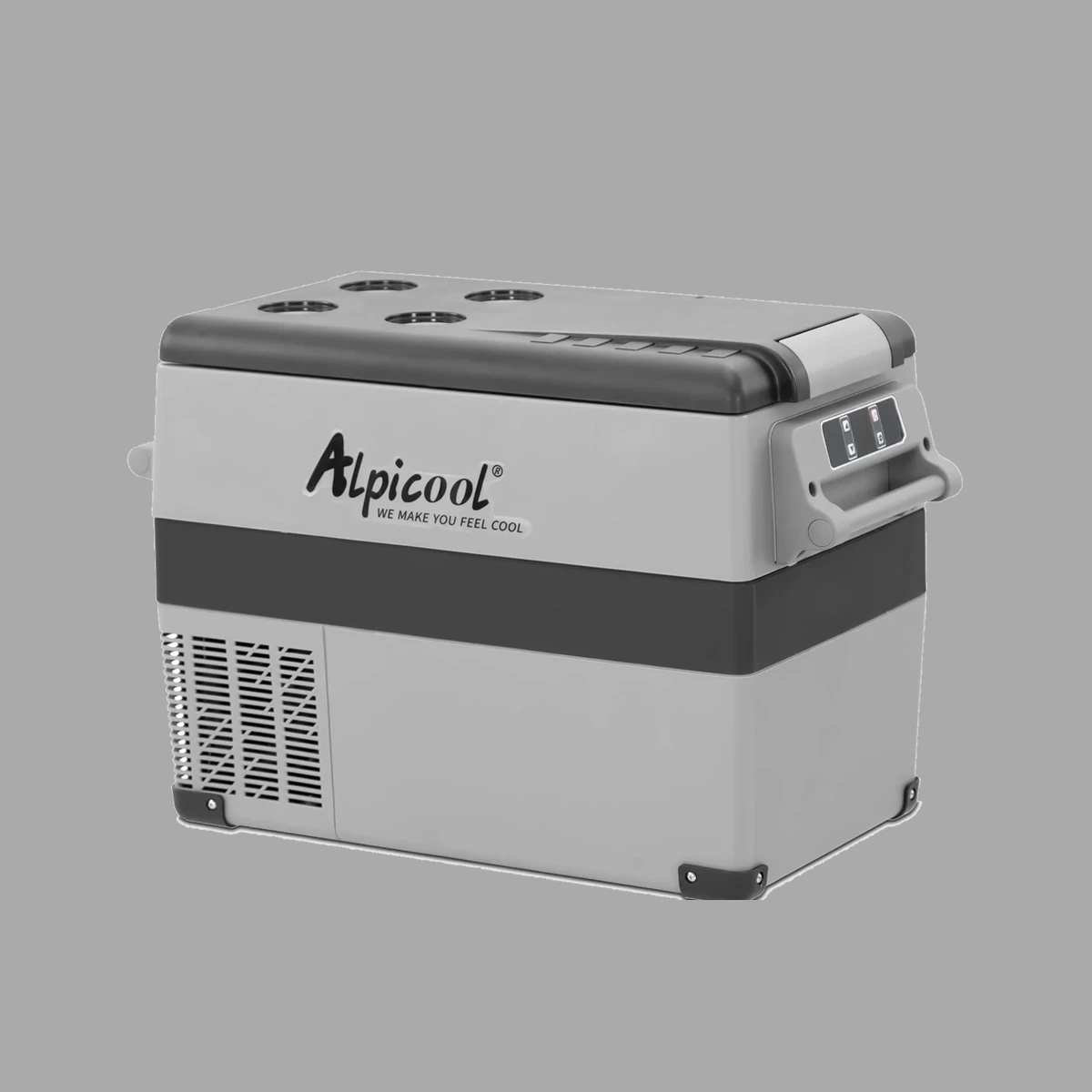
The value pick that embarrasses coolers twice its price. Not perfect, but close enough to make you question the premium.
The cheapest cooler is the one you only buy once.
A modern compressor cooler draws roughly 35–60W while the compressor runs, but it cycles — typically 20–40% duty cycle once at temperature. Overnight (10 hours) that's roughly 70–240Wh, well within what a healthy pair of Group 31 batteries handles. The killer isn't the cooler, it's a weak battery or a cooler with a bad seal running 100% duty cycle. Try the cooler battery drain calculator for your exact setup.
Honestly: compressor coolers struggle when the ambient is far below their setpoint — the compressor rarely needs to run, but the electronics and display can get sluggish, and LCD screens may go blank until they warm up. The food stays cold (obviously). The practical move is keeping the cooler inside the sleeper rather than an unheated side box, and not trusting the digital display until the cab warms up.
Do the math for your own runs: a bag of ice every 2–3 days at truck-stop prices adds up fast over a year. A compressor cooler typically pays for itself within a single season of regular use — and your food stays at a safe, consistent temperature instead of swimming in meltwater by day two. The battery drain calculator and the full best 12V coolers guide cover the rest.
Compressor, every time, if you need real refrigeration. Thermoelectric is fine for keeping drinks cool on mild days — that's it.
25–35L covers a week of food for one driver. Go 40L+ for team driving or serious meal prep.
Yes, with healthy batteries. A modern compressor cooler uses roughly 70–240Wh overnight — fine for a good battery bank.
Marketing. A 12V 'fridge' and 'cooler' with a compressor are the same technology. Check the compressor spec, not the label.
Deal alerts
Price drops on the gear you actually want, in your inbox before they sell out.
Deal alerts aren't live yet — we're building real price tracking first. Check back soon.
— Marcus
Disclosure: The Driver Gear is reader-supported. When you buy through links on this page, we may earn an affiliate commission at no extra cost to you. Scores reflect our editorial comparison methodology — how we test.