14/20
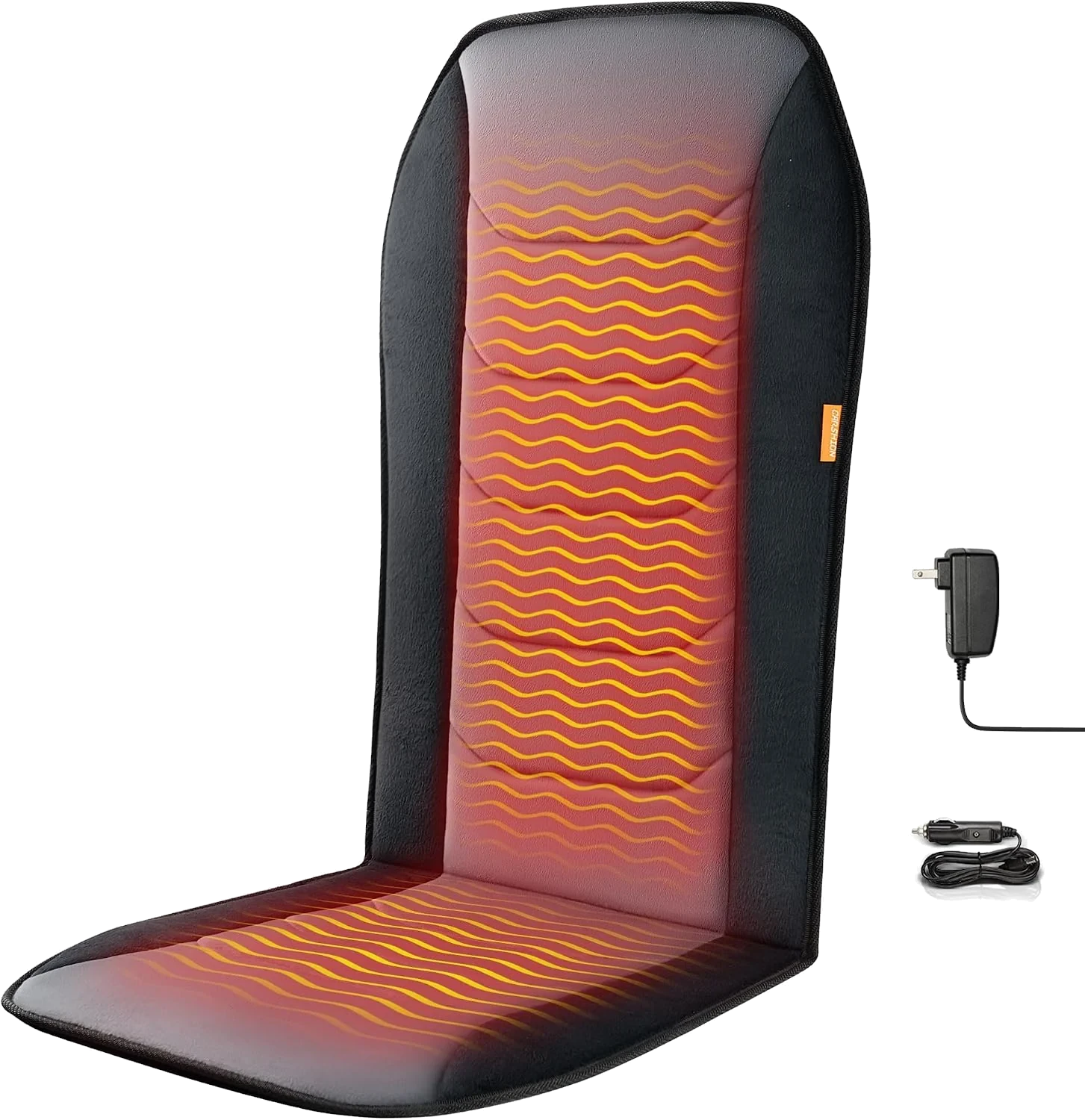
#1 — CARSHION heated seat cover
Plugs into the 12V port and heats the seat, not the cab. The first-hour-of-shift fix.
Buying guide
Three plug-in 12V seat covers ranked and scored. Honest amp draw, air-ride seat fitment, and the failure pattern nobody advertises.
Updated October 8, 2026
Here is the working rule for this guide: a heated seat cover is the most efficient way to stay warm while driving — but it is also the 12V accessory most likely to disappoint you. The category is full of thin heating elements, undersized wiring, and controllers that run full-blast until something gives up. This guide scores three plug-in covers on comfort, support, durability, and value — and is honest about which one survives a winter of daily use.
Research-based. We did not test these hands-on. Scores come from published specs and verified buyer reviews, weighted toward real thermostat control, published safety features, and buyer evidence of surviving daily use. Prices are approximate, in CAD, and change often — check the live listing before you buy.
Plugs into the 12V port and heats the seat, not the cab. The first-hour-of-shift fix.
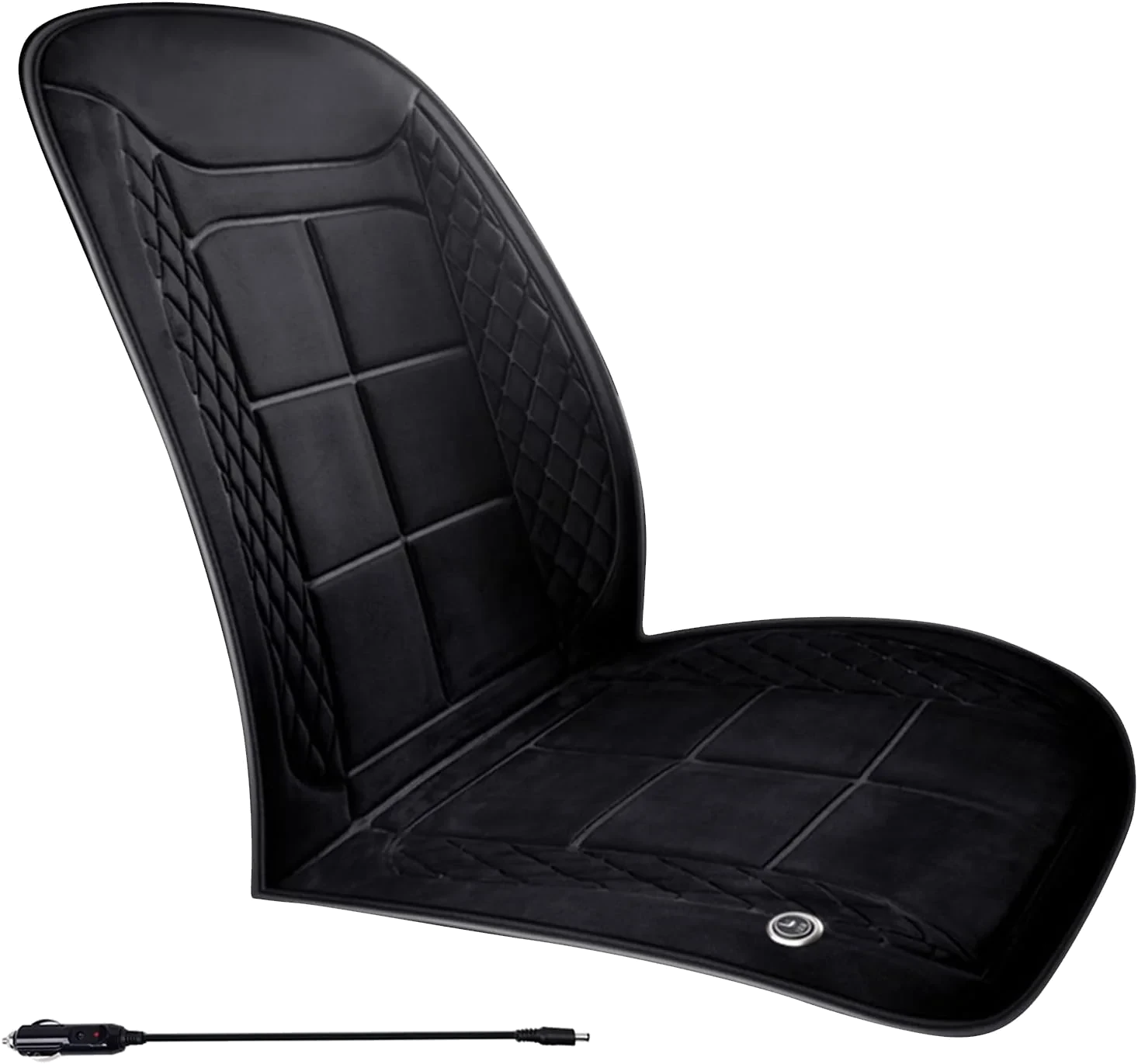
The budget heated cover. It heats; don't expect the refinement of the top picks.
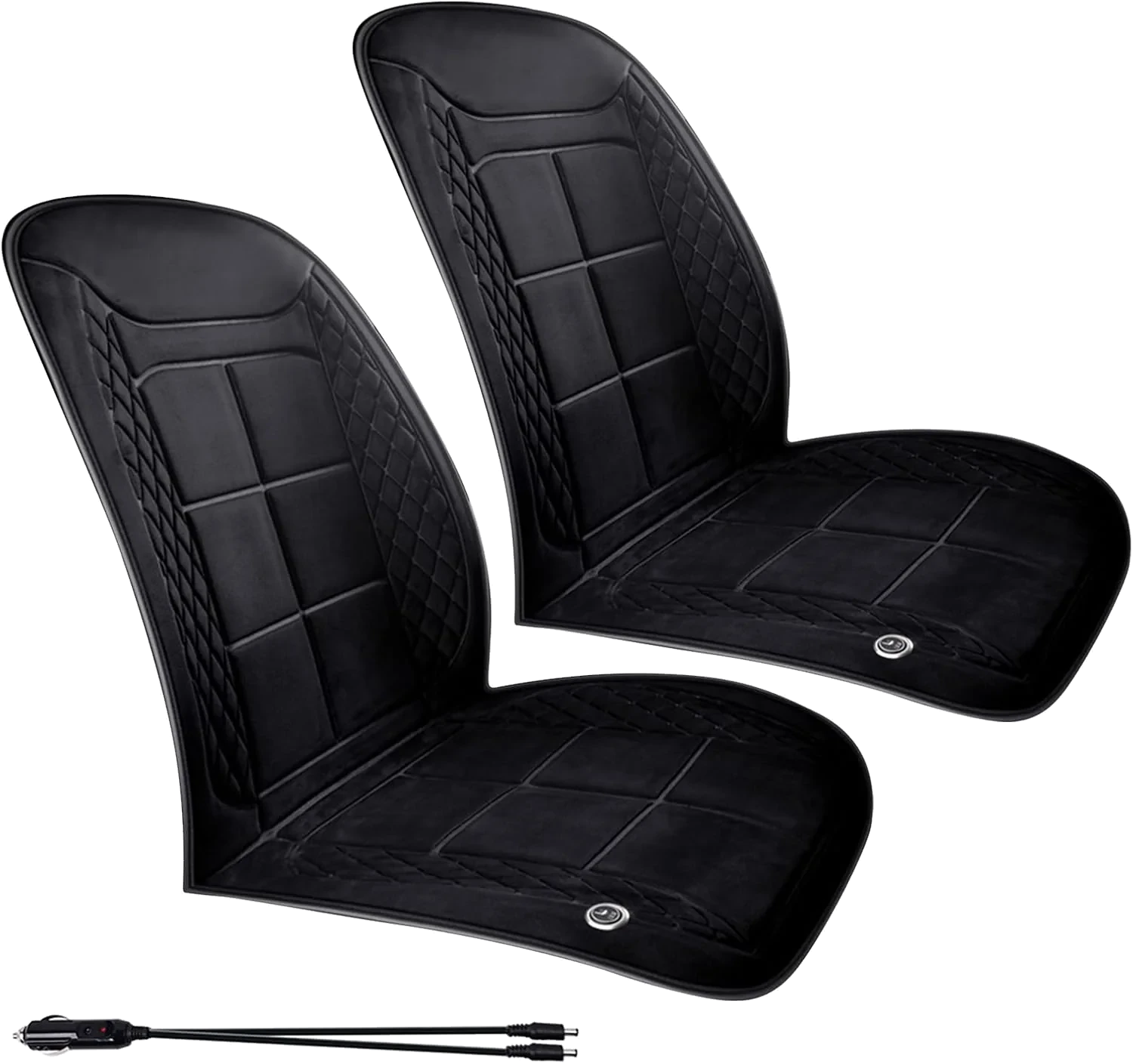
Heats two seats for team drivers. Budget build — expect budget longevity.
A heated seat cover draws 3 to 5 amps — a tenth of what a plug-in heater wants. It is the most power-efficient warmth you can buy for the driver's seat.
A typical 12V heated seat cover draws about 35–60 watts on high — roughly 3 to 5 amps per seat. That is the honest number: light enough for any 15-amp accessory outlet, even with two seats plugged in, and an order of magnitude easier on your electrical system than a plug-in heater. While the engine runs, a seat cover is one of the cheapest loads in the cab. That is also why the math is forgiving: two covers at full heat stay comfortably under a standard 15-amp fuse.
The catch is the one nobody prints on the box. Buyer evidence across the category shows the same failure pattern: thin heating elements, undersized wiring, and a controller with no real thermostat that runs full-blast until it burns out. The honest ones last a season or two of daily winter use — and then you replace them. Scores in this guide weight durability and buyer evidence of survival accordingly, which is why the field is tight and nobody scores near the top.
The other fitment warning is specific to trucks. Almost every heated seat cover on the market is sized for a car seat, and a semi's air-ride seat is wider and deeper. If the straps are short, the cover slides the moment you bounce — check the strap length and hook design before you buy, not after. See our back pain & posture guide for how seat setup affects a full driving day.
A real thermostat, not just high/low. The single most important feature in this category. A controller that cycles to hold temperature protects the heating elements and the wiring — and your seat. Listings that only promise "fast heating" with no temperature control are telling you the controller runs full-blast, which is the fastest route to the failure pattern above.
Published power draw and a fused plug. An honest listing names its wattage or amp draw — expect 35–60W per seat. A fused plug protects your socket if the wiring inside the cover fails. If the listing publishes neither the draw nor the fuse, you are buying a mystery.
Straps that fit a truck seat. Car-sized covers on air-ride seats slide, bunch, and end up under your thighs instead of under your back. Look for long elastic straps with real hooks, and buyer photos on larger seats — not just the marketing render.
Separate back and seat zones. Covers that heat both the seat bottom and the backrest keep you warmer at the same draw, because your core loses heat both ways. Single-zone bottom-only pads leave your back cold and you end up cranking the heat to compensate.
| Product | Score | Comfort | Durability | Value | Best for |
|---|---|---|---|---|---|
| CARSHION | 14/20 | 14 | 13 | 12 | Best overall pick |
| YSHHKEE | 10/20 | 10 | 10 | 12 | Budget pick |
| Generic two-seat | 10/20 | 8 | 12 | 11 | Two-seat value (team drivers) |
Buy the CARSHION heated seat cover — at 14/20 it leads every bar that matters: comfort, support, durability, and value. It is the only pick here that looks like it was built for daily winter use rather than a single season of commutes. The YSHHKEE heated seat cover is the budget pick (10/20): its value score matches the CARSHION's, but comfort and support drop — expect less even heat and a shorter life. The generic two-seat cushion (10/20) is the value play for team drivers who need both seats covered at once; its durability score is respectable, but comfort is the weakest in the guide at 8. Whichever you buy, treat it as an attended-use daytime tool: unplug it when you park, check the plug warmth in the first week, and expect a season or two — not a lifetime. For sleeping warmth, a 12V heated blanket over a good sleeping bag remains the better system — see our winter sleeping bag rankings for the other half of the equation.
Research-based scoring: we did not test these hands-on. Every heated seat cover goes through the same 20-point rubric — published specs and named safety features first, then verified buyer evidence of comfort and surviving daily winter use, with value weighted last. Read the full methodology →
Typically 3 to 5 amps per seat on high — about 35 to 60 watts. Two covers at full heat stay comfortably under a standard 15-amp accessory fuse. Run them while the engine is on; they are cheap for the alternator and expensive for a parked battery.
Not overnight. At 3 to 5 amps, a cover pulls 30 to 50 amp-hours over a 10-hour rest — that will flatten truck batteries. These are attended-use daytime tools. For sleeping, a heated blanket over a sleeping bag is the system that works — covers are for driving, blankets are for sleeping.
Often poorly. Semi seats are wider and deeper than car seats, and short straps let the cover slide and bunch. Check strap length and hook design before buying, and look for buyer photos on larger seats — the marketing render is always a car.
The recurring buyer pattern: thin heating elements, undersized wiring, and a controller with no real thermostat running full-blast until something gives up. The honest ones last a season or two of daily winter use. Buy a real thermostat and a fused plug, unplug when you park, and treat it as a consumable, not a lifetime purchase.
Different jobs. A seat cover wins while driving: it warms you in the seat for 3 to 5 amps without taking your hands off the wheel. A blanket wins while sleeping: it covers your whole body and pairs with a sleeping bag. If you can only buy one, the blanket — it works in the bunk, the passenger seat, and the house.
Deal alerts
Real drops on the gear you actually want. No fake sales, no pressure tactics.
— Marcus
Disclosure: The Driver Gear is reader-supported. When you buy through links on this page, we may earn an affiliate commission at no extra cost to you. Scores reflect our editorial comparison methodology — how we test.