14/20
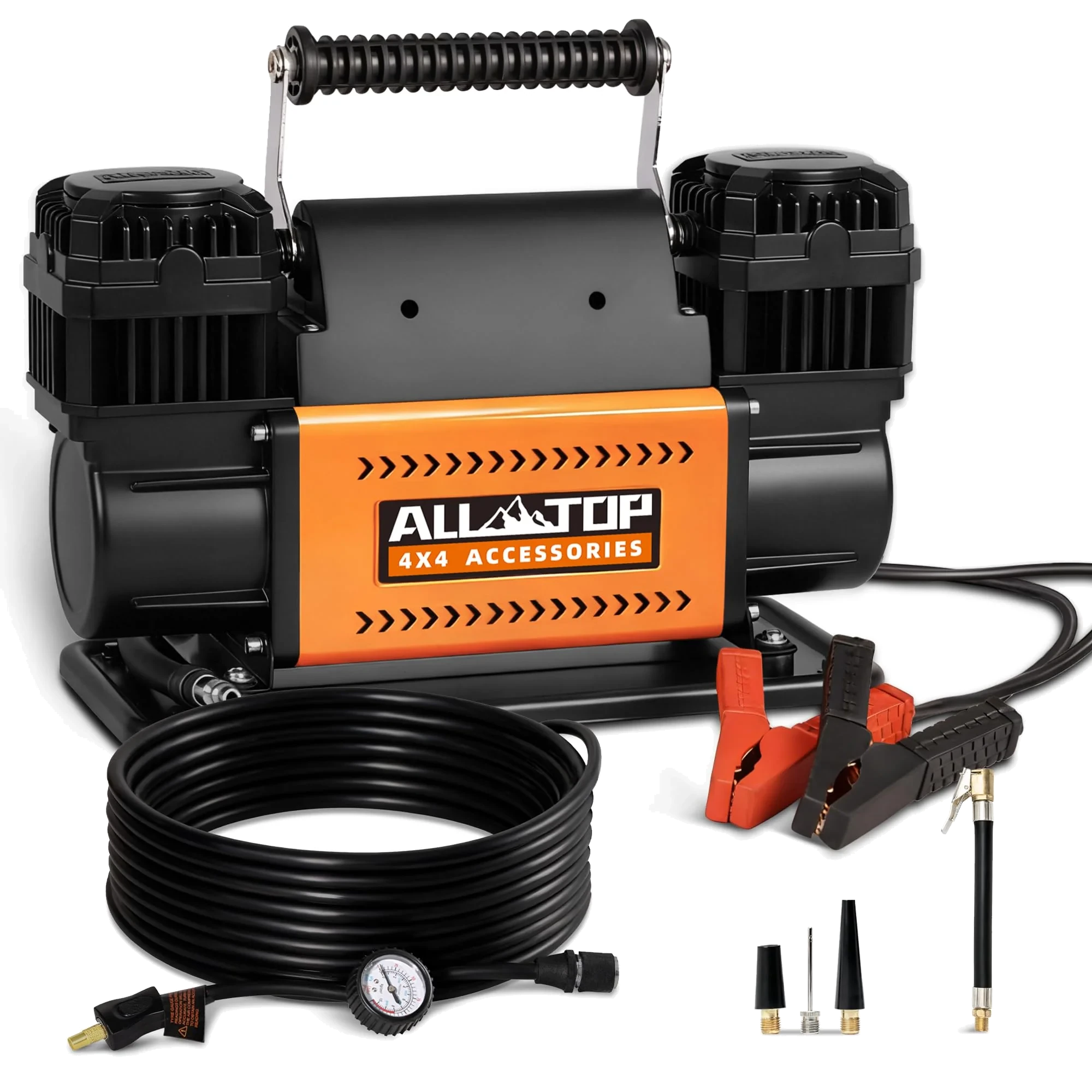
ALL-TOP dual-cylinder 12V tire inflator (14/20)
Dual cylinders for the air volume truck tires need. Fills the tire; rest it between tires.

Guide
The cheapest fuel saving in trucking is air. It's free.
Updated October 5, 2026
Tires are the most ignored fuel-saving device on the truck. A few PSI low across 18 wheels costs real money every single mile, and nobody notices until the blowout.
Check pressures cold — before driving or at least 3 hours after stopping. Hot readings lie. Use a quality gauge (stick gauges are fine if they're accurate; digitals are easier to read in the dark). Check weekly; check before any long run.
Follow the tire manufacturer's load/inflation tables for your actual axle weights — or your fleet spec, which was set by someone who did that math. Steer tires typically run higher than drives and trailers. Never exceed the sidewall maximum, never run below the minimum for your load.
Dual cylinders for the air volume truck tires need. Fills the tire; rest it between tires.
A portable 12V inflator means never hunting for a working air hose at a truck stop. Slow, but it gets you to spec without the detour.
Air is free. Fuel isn't. Tires aren't.
Weekly minimum, cold. Before long runs always.
Cold. Hot tires read high and will mislead you into underinflating.
Yes — underinflation increases rolling resistance measurably across 18 wheels.
Deal alerts
Real drops on the gear you actually want. No fake sales, no pressure tactics.
— Marcus
Disclosure: The Driver Gear is reader-supported. When you buy through links on this page, we may earn an affiliate commission at no extra cost to you. Scores reflect our editorial comparison methodology — how we test.