Money guide
Memory foam vs gel seat cushions: Pros, cons, and who each suits
Foam or gel? The material decides more than the brand
Drivers compare brand names, but for seat cushions the material does most of the work. Two drivers can buy the same-shaped cushion and have opposite experiences — because one is dense memory foam and the other is gel, and they behave nothing alike on an 11-hour shift.
Here’s the short version of how each type behaves:
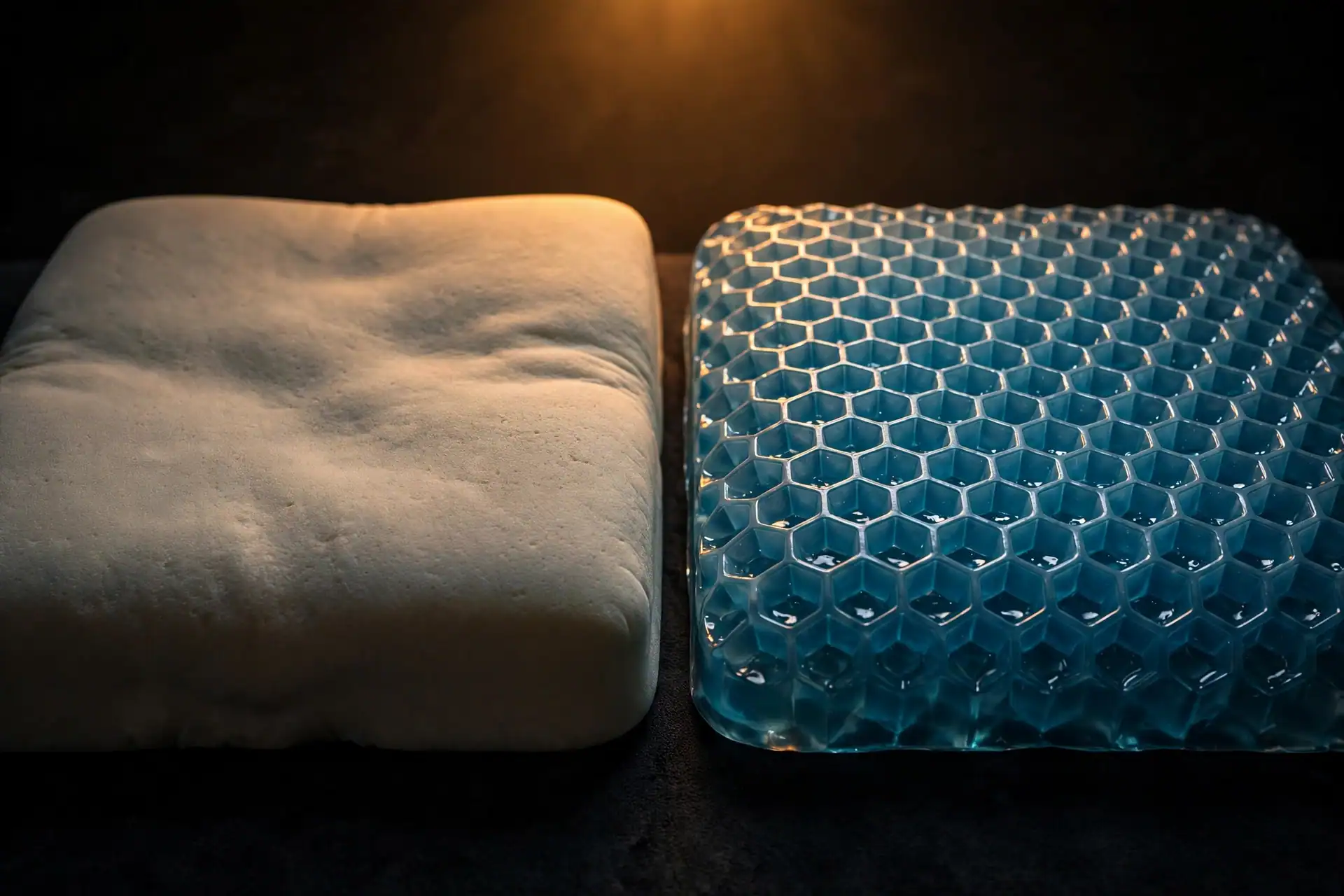
- Memory foam — viscoelastic, heat-responsive. Moulds to your body as it warms up, spreads pressure evenly, and absorbs vibration well. Downside: dense foam is an insulator, so it holds your body heat. In a cold cab it also firms up until your body heat softens it — noticeable on a January cold start.
- Gel-infused foam — memory foam with a cooling gel layer. Same contouring, less heat build-up. A middle ground.
- Honeycomb/grid gel (TPE polymer) — a structured gel grid with open air channels. Pressure relief without the sinking feeling, and air moves through it so it stays temperature-neutral. Downside: less structured support than dense foam, and the good ones cost more.
Below: three picks that show each lane at its best — one foam, one grid gel, one gel-foam hybrid — all actually buyable in Canada.
How this guide was made: This is a research-based guide. We did not test these cushions hands-on. Every claim below is based on published specs and driver reviews — manufacturer pages, retailer listings, and published truck-driver buying guides. Prices are approximate and change often; check current prices before you buy. This is a companion piece to our seat-cushion buying guide for Canadian truck drivers — that guide compares the three types at a glance; this one zooms in on materials.
Affiliate disclosure: This article contains affiliate links to products on Amazon.ca. As an Amazon Associate I earn from qualifying purchases.
Quick picks
- BEST MEMORY FOAM — Mosxoed Truck Driver Seat Cushion — high-density memory foam made for truck seats, with an adjustable strap so it stays put. About C$43 on Amazon.ca (prices move around; as of September 2026), 4.1/5 from 796 published ratings.
- BEST GRID GEL — Helishy jumbo honeycomb gel cushion — 19″ × 18″ of cooling TPE gel. About C$37.98 on Amazon.ca, 4.2 stars from 3,748 published ratings.
- BEST HYBRID — MargGona Gel Enhanced — memory foam with a cooling gel layer and a tailbone cutout. Currently unavailable on Amazon.ca as of Sept 23, 2026 (listing live, 4.1/5 from 125 ratings, but not purchasable) — check the listing before ordering.
The three picks in detail
1. Mosxoed Truck Driver Seat Cushion (best memory foam pick)
Published specs (from the Amazon.ca listing, ASIN B0DD2XH27M):
- Size: 16.8″ × 18.3″ — a large footprint sized for truck seats
- Material: high-density memory foam (“memory cotton”) core
- Adjustable buckle strap plus silicone non-slip bottom — built to stay put on a truck seat
- Breathable mesh cloth surface; machine-washable cover
- Weight: about 1.3 kg
- About 4.1 stars from 796 published ratings on Amazon.ca
- Price: about C$43 on Amazon.ca — approximate, prices move around (as of September 2026)
Based on published specs and driver reviews:
- Pros: Made for truck seats, not adapted from an office chair — the size and the strap show it. High-density foam resists bottoming out under sustained weight, which is the whole point of foam. The strap matters if you slip-seat: the cushion stays where you left it. Breathable mesh surface is a step up from solid-topped foam in summer.
- Cons: Generic brand with a mid-size review base. Adds seat height like any foam cushion, so tall drivers should check headroom. Memory foam still holds more heat than gel and firms up in a cold cab until your body heat softens it.
- Best for: Drivers who want maximum support and durability from foam, and anyone who moves between trucks and needs the cushion to stay put.
2. Helishy jumbo honeycomb gel cushion (best grid gel pick)
Published specs (from the Amazon.ca listing):
- Size: 19″ L × 18″ W — the largest footprint of the three picks
- Material: honeycomb TPE cooling gel with a ventilated design
- Zippered, washable non-slip cover
- About 4.2 stars from 3,748 published ratings on Amazon.ca
- Price: about C$37.98 on Amazon.ca — approximate, prices move around
Based on published specs and driver reviews:
- Pros: One of the cheapest ways to try real cooling gel, with the biggest published review base of the three picks. The honeycomb structure is designed to circulate air and resist flattening better than cheap foam. At 19″ × 18″ it’s roomy enough for bigger drivers and wider truck seats.
- Cons: Generic brand — quality control can vary between sellers, so read the listing carefully before ordering. TPE gel is comfort and cooling, not structured posture support; it generally won’t hold you upright the way dense foam does. Feels cold against you in a freezing cab until it warms up.
- Best for: Hot sitters on a budget, bigger drivers who need a large footprint, and anyone who wants to try gel cooling with low risk.
3. MargGona Gel Enhanced cushion (best hybrid pick)
Published specs (from the Amazon.ca listing):
- Material: memory foam base with a cooling gel layer on top
- U-shaped cutout at the back for the tailbone (coccyx)
- Non-slip rubber bottom; machine-washable zippered cover
- Heat-responsive foam — moulds to your body as it warms up
- Price: was about C$40 on Amazon.ca — currently unavailable as of Sept 23, 2026 (listing live at 4.1/5 from 125 ratings, but “we don’t know when or if this item will be back in stock”). Check the listing before ordering; if it’s still unavailable, the Helishy grid gel is the closest buyable alternative.
Based on published specs and driver reviews:
- Pros: The middle ground done cheaply — foam contouring plus a gel layer that takes the edge off the heat. The U-shaped tailbone cutout is the feature that matters most for drivers whose tailbone aches by hour six. Non-slip base and washable cover cover the basics. Same price as the full-gel pick, so the choice is purely about feel.
- Cons: Generic brand with a limited published review history — buy on the strength of the design, not the rating count. The gel layer cools less than a full honeycomb grid; it’s an improvement over plain foam, not a transformation. Foam needs the usual break-in period.
- Best for: Drivers who want foam’s contouring but run too hot for plain memory foam — and anyone whose main complaint is tailbone pressure.
Side-by-side comparison
| Specification | Mosxoed (memory foam) | Helishy jumbo (grid gel) | MargGona (gel hybrid) |
|---|---|---|---|
| Size | 16.8″ × 18.3″ | 19″ × 18″ | Standard (see listing) |
| Material | High-density memory foam | Honeycomb TPE gel | Memory foam + gel layer |
| Cooling | Mesh surface; still foam underneath | Excellent — honeycomb airflow | Good — gel layer over foam |
| Support feel | Firm, structured | Soft-to-medium, comfort-first | Medium — contouring with cooling |
| Tailbone relief | Pressure spreading, no cutout | Pressure spreading, no cutout | U-shaped cutout |
| Stays put | Adjustable strap + non-slip | Non-slip cover | Non-slip rubber base |
| Cold-cab behaviour | Firms up until body heat softens it | Feels cold at first in January | Firms slightly; gel feels cool at first |
| Washable | Cover machine-washable | Cover machine-washable | Cover machine-washable |
| Approx. price (CAD) | ~C$43 | ~C$38 | Unavailable |
| Published ratings | 4.1/5, 796 ratings | 4.2/5, 3,748 ratings | 4.1/5, 125 ratings |
| Best for | Firm support, slip-seat drivers | Budget cooling, large footprint | Tailbone pressure + heat together |
Prices are approximate and were rechecked in September 2026 — they change often. Ratings are retailer-listing aggregates — recheck live listings before buying.
Our verdict: who should choose which?
There isn’t one winner — the right material depends on your body and your cab:
- Choose memory foam if your main problem is support and durability — sore sit bones, a cushion that flattens in a month, or you move between trucks and need it to stay put. Accept the heat and the stiff January start.
- Choose grid gel if your main problem is heat — you finish shifts sweaty, summer driving is miserable, or foam has always felt too warm. Accept the softer support.
- Choose the gel hybrid if you want both — foam’s contouring with a gel layer for cooling — and especially if your tailbone is the main complaint, thanks to the cutout.
If you drive Canadian winters and Canadian summers, the honest answer is that foam wins January and gel wins July. One cushion won’t be perfect in both. And remember: a cushion works best on a properly set-up seat — see our free cab posture fixes before you spend a dollar.
One tip from a military-trained driver
Whatever material you pick: sit on it for two full shifts before you decide. Foam needs a couple of hours to break in, and gel needs your body heat to stop feeling strange. If it still feels wrong after two days, return it — many Canadian retailers accept returns within 30 days, but check the policy before you buy.
Frequently asked questions
Does memory foam go hard in the cold?
Yes — that’s a known property of viscoelastic foam, not a defect. It firms up in a cold cab and softens as your body heat works into it. On a January morning, expect the first 20–30 minutes to feel stiffer than the afternoon did.
Which is better for heavy drivers — foam or gel?
Dense foam, generally. High-density memory foam resists bottoming out under sustained weight, while gel and soft foam can compress to the point where your sit bones press through to the seat. If a cushion doesn’t publish a weight rating or describe its foam density, treat that as a warning.
Can gel cushions leak or burst?
The products in this guide use solid TPE gel, not liquid-filled bladders — there’s nothing to burst. They can tear if cut or punctured, but under normal sitting they don’t leak.
Can I stack foam under gel to get both?
You can, but you add 4–5 inches of seat height, which causes headroom and pedal-reach problems in most cabs. Better: pick one material that solves your biggest complaint, or choose a gel-foam hybrid that’s designed as one unit.
Related reading
- Seat Cushions for Canadian Truck Drivers — Buying Guide — the full three-type comparison this article builds on
- Free Cab Posture Fixes — the 15-minute seat reset; cushion plus setup beats cushion alone
About The Driver Gear
The Driver Gear is written by a Canadian military-trained driver with real experience operating heavy vehicles, working long days, and inspecting gear before trusting it. The aim is simple: explain the fit, power and comfort trade-offs in plain language, then show the evidence behind each recommendation.
This guide is informational only and not medical advice. If you have persistent back pain, talk to your doctor or a physiotherapist.
Leave a Reply