Winter power
How long can you run a 12V cooler overnight without killing your truck batteries?
Short answer: a compressor fridge will sip 10–15 amp-hours over a 10-hour rest — a rounding error on a healthy battery bank. A thermoelectric cooler will chew through 40–50 amp-hours doing the same job, and in winter it is not even keeping anything cold. The cooler type matters more than the battery bank.
Research-based. We did not test these hands-on. Scores come from published specs and driver reviews. This article contains affiliate links to Amazon.ca — same price to you, we may earn a commission. As an Amazon Associate I earn from qualifying purchases. Prices are in CAD and can change — check the live listing before you buy.
Key takeaways
- Compressor fridge: 10–15 Ah overnight. A few percent of a healthy bank — sleep easy.
- Thermoelectric cooler: 40–50 Ah overnight. On an older bank in the cold, that is the difference between starting and calling for a boost.
- Cold halves your capacity. At −30°C a lead-acid bank delivers roughly half its rated amp-hours.
- Set battery protection to high in winter. The fridge cutting out at 3 a.m. beats a truck that will not start at −35°C.
The math
The overnight math
A typical long-haul truck carries three or four Group 31 batteries — roughly 300–400 amp-hours at 12V in total. Two things eat into that number before your cooler draws a single amp.
First, starting batteries should not be drained past about half. Go deeper regularly and you shorten their life fast. Second, cold steals capacity: at −30°C a lead-acid battery delivers roughly half its rated amp-hours. Your 400 Ah bank is effectively a 200 Ah bank on a January night — and 100 of those are the half you should not touch.
Now the cooler. A compressor fridge like the BougeRV 23QT draws about 45W in ECO mode while the compressor runs — roughly 3.75 amps. But the compressor cycles: in a cool sleeper it might run a third of the time, averaging just over 1 amp. Ten hours: roughly 10–15 amp-hours. That is a few percent of your usable bank. Sleep easy.
A thermoelectric cooler has no thermostat and no off switch for its Peltier module — it pulls a steady 4–5 amps all night. Ten hours: 40–50 amp-hours, and that is before the cold-weather capacity loss above. On an older bank, that is the difference between starting in the morning and calling for a boost.
- 10–15 Ah — compressor fridge, 10-hour night
- 40–50 Ah — thermoelectric cooler, 10-hour night
- 300–400 Ah — typical 4-battery bank, rated
- ~50% — usable capacity left at −30°C
Cold weather
Why winter makes it worse
Summer forgives a lot. Winter forgives nothing. A battery sitting at 12.0V at +20°C will still crank; the same battery at −30°C may not turn the starter at all. Cold thickens engine oil, stiffens every moving part, and halves the battery’s available power at the same time. The margin you had in July is gone in January.
Age matters too. Batteries lose capacity every year, and the loss is invisible until the first −35°C morning. If your bank is three winters old and you are running a thermoelectric cooler all night, you are stacking three risks: old batteries, halved cold capacity, and the hungriest cooler type. Any one is fine. All three together is a no-start.
Protection
The low-voltage cutoff is your insurance
Good compressor fridges come with a three-level battery protection setting — high, medium, low. It watches the voltage and shuts the fridge off before the bank drops into the danger zone. In winter, set it to high. The fridge cutting out at 3 a.m. is an inconvenience; a truck that will not start at −35°C is a safety problem.
Thermoelectric coolers like the Koolatron P27 have no cutoff at all — the fan and module run until you unplug them or the batteries give up. Your only guard is the truck’s own low-voltage disconnect, if it has one. This is the honest reason experienced winter drivers treat thermoelectric coolers as a summer tool.
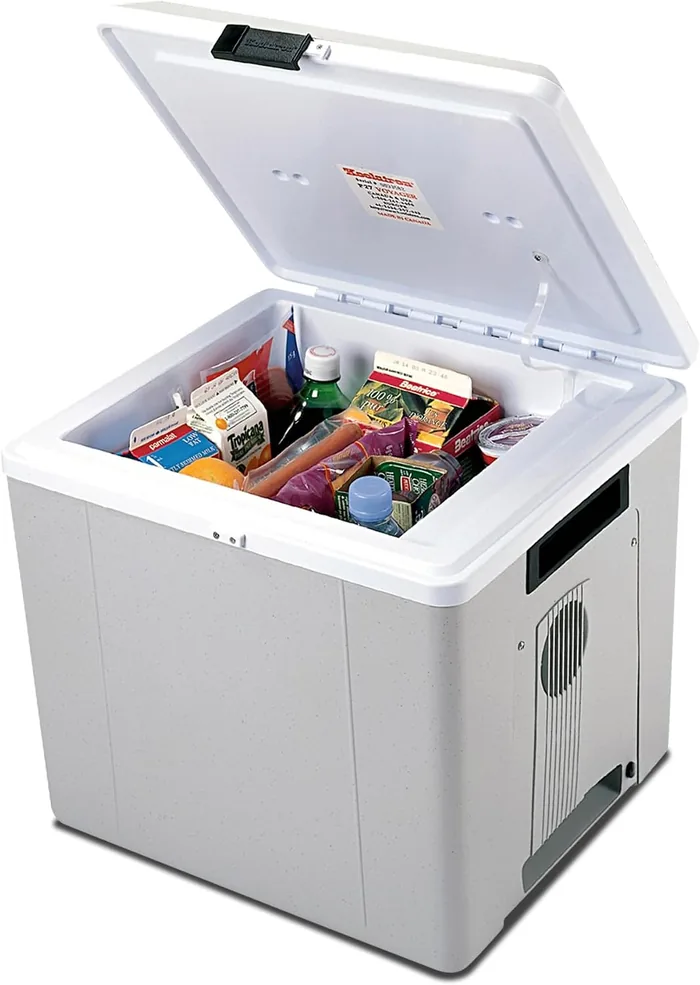
Thermoelectric
If you run a thermoelectric in winter anyway
First, ask why. In a heated sleeper a thermoelectric cooler cools relative to ambient air and will freeze your drinks — it has no thermostat (see what each cooler type does at −40°C). You are spending 40–50 amp-hours a night for a box that is actively working against you.
If you are stuck with one for the season: idle the truck 30–60 minutes mid-rest to top the bank back up, keep the bank’s terminals clean and tight (corrosion is a silent amp thief), and consider a portable power station as a buffer so the cooler never touches starting power. Better still, plan the upgrade — winter alone justifies a compressor fridge.
The picks
Two fridges that protect your batteries
Both have proper low-voltage battery protection — the feature that matters most on this page. Scores are provisional · specs + reviews.
BougeRV 23 Quart Portable Car Fridge
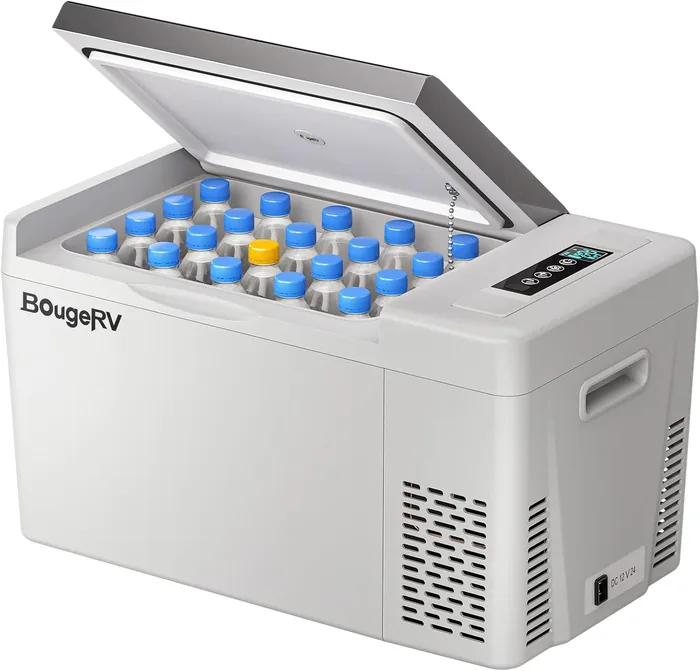
Best budget compressor — about $230 CAD (Sep 2026).
Alpicool CF55 Portable Fridge/Freezer
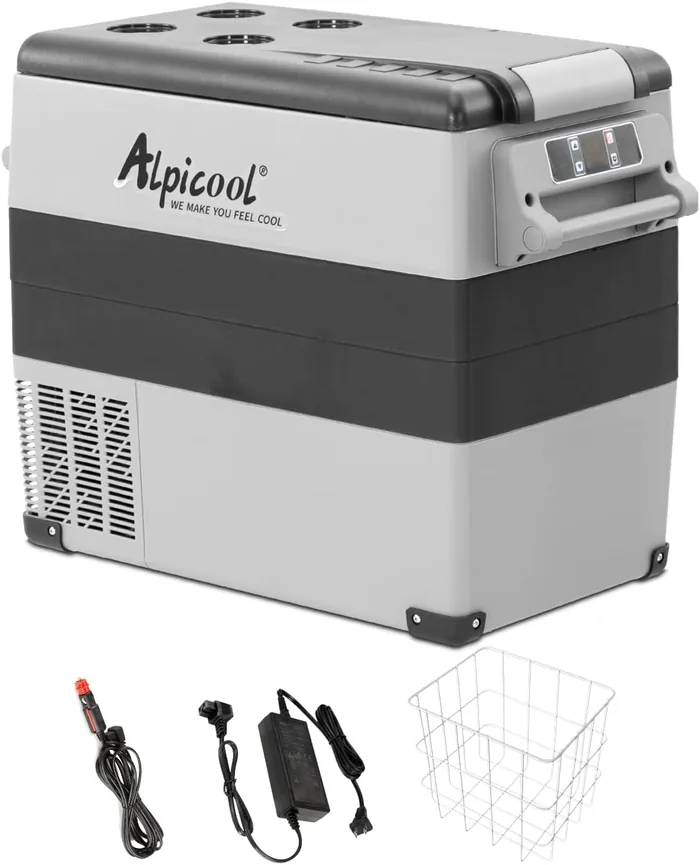
Best mid-range — about $360 CAD (Sep 2026).
See where both land on the best 12V coolers for truck drivers shortlist.
FAQ
Overnight power questions, answered
Will a 12V cooler drain my truck batteries overnight?
A compressor fridge will use roughly 10–15 amp-hours over 10 hours — negligible on a healthy bank. A thermoelectric cooler draws 4–5 amps continuously, using 40–50 amp-hours overnight, which can leave an older bank too weak to start the truck in the cold.
What voltage is too low to start a truck?
As a rough guide, a resting bank below about 12.0V at room temperature is already weak, and cold makes it worse — at −30°C the same battery delivers roughly half its rated capacity. If you have a voltage readout, anything drifting toward 11.5V overnight deserves attention before morning.
Does the cold really halve battery capacity?
Roughly, yes. Lead-acid capacity falls steeply with temperature — at −30°C you can expect around half the rated amp-hours. This is why a setup that works fine in September can leave you stranded in January with nothing changed but the thermometer.
What does the battery protection setting on a 12V fridge do?
It monitors your battery voltage and shuts the fridge off before the bank drains too far, in three steps (high/medium/low). In winter set it to high — the fridge may cut out overnight, but your truck will still start in the morning.
Can I just idle the truck all night instead?
You can, but it burns roughly 30 litres of diesel over a 10-hour rest and many jurisdictions restrict idling. A compressor fridge plus the high cutoff setting solves the same problem for a few percent of your battery bank.
How this guide was made
Research-based. We did not test these hands-on. Scores come from published specs and driver reviews.
We worked from manufacturer specifications for compressor and thermoelectric 12V coolers, published buyer-review aggregates, and standard lead-acid battery capacity figures at cold temperatures, as of September 2026. Scores are our own, out of 20. Prices were approximate at research time — the Amazon link shows the current price.
Keep reading
Keep reading

Best 12V coolers for truck drivers
The compressor shortlist, with battery protection compared.
Read the guide →
Winter
Do 12V coolers work at −40°C?
Why cooler type matters more than brand in deep cold.
Read the guide →
Winter
Winter cab comfort checklist
The full cold-weather cab setup, including 12V safety.
Read the guide →