Reviews · Winter
Best Tire Chains for Semi Trucks in Canada (2026)
Short answer: carry a set of cam-style single chains matched to your drive tires, plus rubber tighteners. In British Columbia, commercial vehicles over 11,794 kg must carry chains from October 1 to April 30 — and knowing how to put them on matters more than which brand you buy. The picks below are genuine Amazon.ca listings, with the chain types and sizing explained first so you buy the right set once.
Research-based. We did not test these hands-on. Scores come from published specs and driver reviews. This guide contains affiliate links to Amazon.ca. As an Amazon Associate I earn from qualifying purchases. Prices are in CAD and change often — check the live listing before you buy.
Key takeaways
- Match the chain to the tire size on your sidewall (11R22.5, 295/75R22.5, and friends) — a chain that almost fits is a chain that fails.
- BC is the only province with a chain-carry law: commercial vehicles over 11,794 kg must carry chains October 1 to April 30 on most BC highways. Everywhere else, check the province before you roll.
- Singles for the drive axle are the standard. Dual and triple-rail chains span both tires of a dual set; cam-style chains tighten without a separate tool.
- Tighteners are not optional on most chains — and a spare set costs less than a coffee run. Re-check tension after the first short roll.
Chain types
Single, dual, and triple-rail: which chain type you need
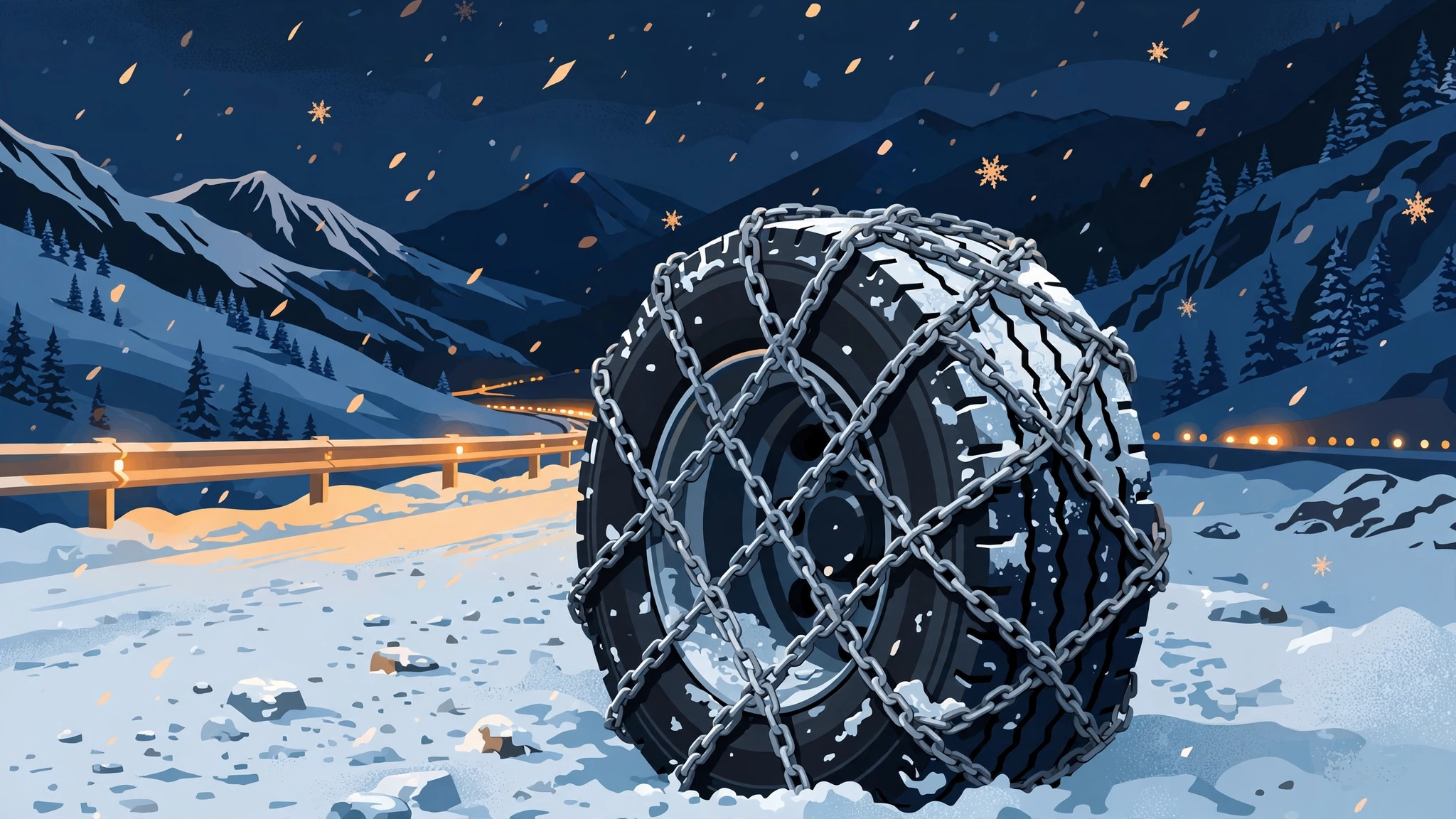
Singles fit one tire at a time and are the standard for the drive axle — a typical tractor-trailer chains all four tires of the main drive axle, which means two pairs of singles. Duals are wider chains that span both tires of a dual wheel set in one piece, and triple-rail chains add a third traction rail across the gap between the duals for extra bite. All three are real, standard product categories — the Security Chain Company catalogue lists them as Truck Singles, Truck Duals, and dual/triple radial ladder patterns.
Two more terms you will see on listings: cam vs non-cam — cam chains have built-in cam tighteners you lever with a small tool (included), so they snug up without separate tensioners, while non-cam chains rely on rubber or spring tighteners; and twist link vs square link — twisted links are the common all-rounder, square or alloy links trade a bit more grip and wear life for more money. For a first set, cam-style singles in your tire size are the beginner-friendly default.
Sizing
Sizing: read the sidewall, buy the matching chain
Chains are sized to tire sizes, not trucks. Read the size off your drive-tire sidewall — common Class 8 sizes include 11R22.5, 295/75R22.5, 285/75R24.5, and 12R22.5 — and buy the chain whose fitment list names that exact size. The Security Chain Company TA3945 dual, for example, is catalogued for 10.00-20, 11-22.5, 13/80-20, 305/70-22.5, and 315/70-22.5. If your size is not on the list, it does not fit — "close enough" chains ride off-centre, slap the wheel well, and break.
Watch the packaging math: chains are usually sold per pair (two tires) but some heavy-duty duals are sold per single chain — the TA3945 listing below is pack-of-1, so chaining both sides of a dual set needs two. Count your drive tires, then count boxes. When in doubt, buy one size of chain for the whole drive axle and keep the fitment chart in the cab.
The law
Chain laws in Canada: what is actually required
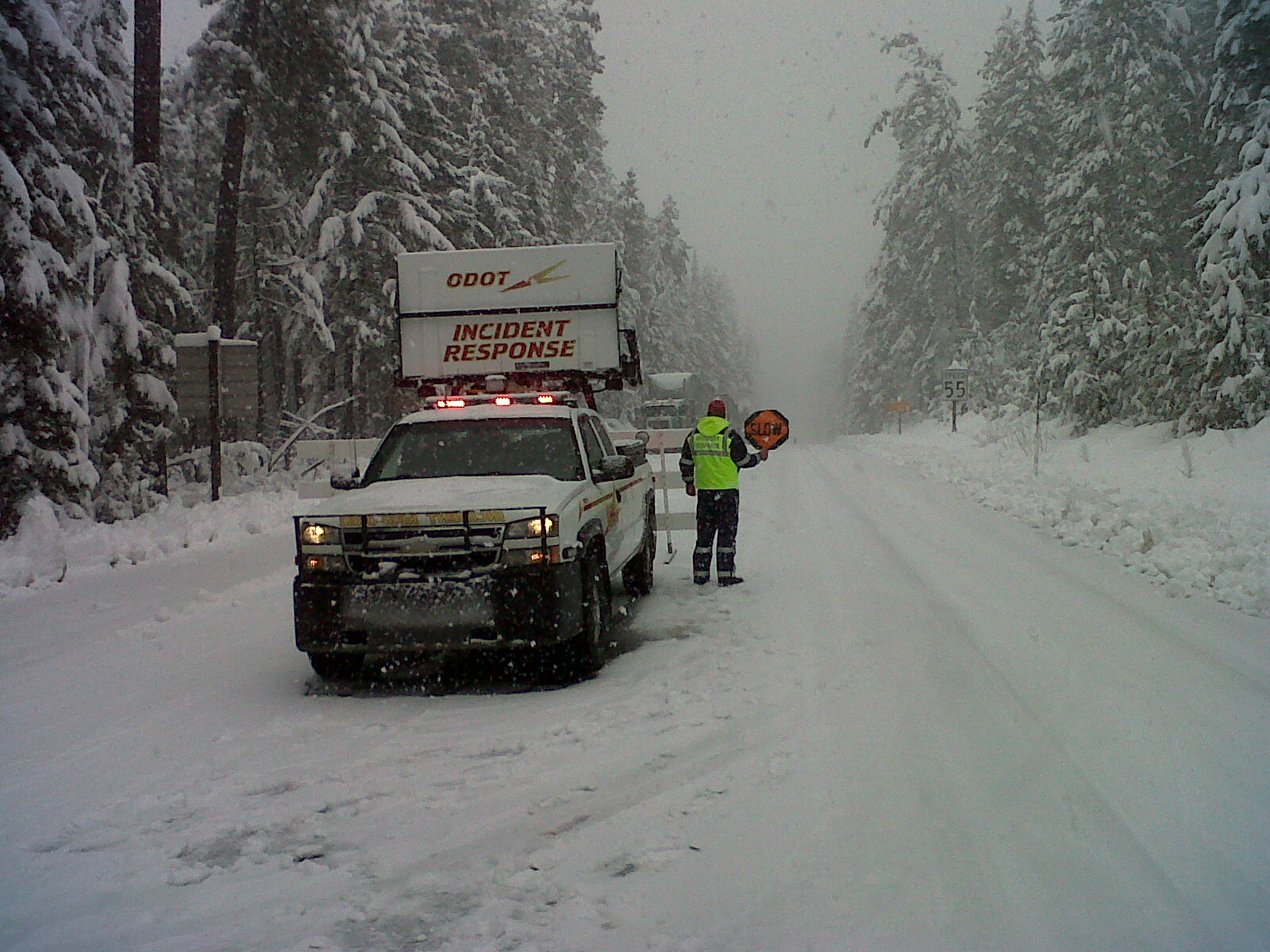
British Columbia is the only Canadian jurisdiction with a tire chain requirement. Commercial vehicles over 11,794 kg (26,000 lb) must carry chains from October 1 to April 30 on most BC highways — look for the "Must Carry Tire Chains, Oct. 1–Apr. 30" signs. Carrying is not the same as installing: when a sign or flashing amber light says chains are required for your weight class, then they go on. Fines run $196 for not carrying chains when required and $598 for not installing them during a mandatory chain-up, and CVSE officers will turn unprepared trucks back at the passes.
Other provinces vary — check before you roll. Alberta has no regulation requiring or prohibiting chains, but you can be cited if chains damage the roadway. That patchwork is exactly why this guide says "check provincial regulations" instead of giving you one rule: the BC dates and designated routes are set by the province and marked with roadside signs, so confirm on DriveBC before a mountain run. One more BC quirk worth knowing: the province does not recognize tire socks or cable-style aids as chain equivalents.
The picks
Four chain picks, compared honestly
We limited this guide to chains with genuine, verifiable Amazon.ca listings — because a recommendation you cannot actually buy in Canada is not a recommendation. Every pick below is indexed from its live Amazon.ca listing as of September 2026.
TireChain.com 11-22.5 Cam Tire Chains (pair)
The beginner-friendly default: cam-style singles for the drive axle, sold per pair, from a seller that does nothing but tire chains.
Pros
- Cam-style tightening: cams plus cam tool included — snug the chain without separate tensioners.
- Honest spec sheet: 5/16 in (.312 in) twisted link, zinc plated, case hardened — all stated on the listing.
- Listed as chain-law rated: the listing recommends it for over-the-road, chain-law, semi-truck use.
Cons
- Priced for the real thing: a pair of 22.5 cam chains costs real money — budget accordingly.
- One tire size family: this listing is for 11-22.5; other sizes are separate listings.
- Chains still need practice: cams make fitting easier, not automatic — rehearse in the yard.
Security Chain Company TA3945 Alloy Radial Truck Duals
For dual wheel sets: a radial ladder chain that spans both tires, in alloy for harder use. Note the pack math — this listing is pack-of-1.
Pros
- Made for duals and triples: radial ladder pattern catalogued for truck dual wheel sets.
- Alloy construction for heavier service than basic twist-link singles.
- Brand with a truck catalogue: Security Chain Company's application guide lists exact tire-size fitments.
Cons
- Pack of 1: you need two of these to chain both sides of a dual set — do the math before checkout.
- Check the fitment list: catalogued for 10.00-20, 11-22.5, 13/80-20, 305/70-22.5, 315/70-22.5 — confirm your size.
- Tighteners required: SCC's own catalogue says tighteners are required on these chains — budget a set.
TireChain.com 11-22.5 Strap-On Emergency Tire Chains (set of 2)
Not a driving chain — a get-unstuck tool. Strap-style emergency chains for when the drives are spinning and the real chains are still in the bag.
Pros
- Fast to fit: strap-on design for getting unstuck without a full chain-up session.
- Heavy cross chain: 9/32 in (.281 in) cross chains per the listing.
- Honest limits on the listing: for getting unstuck only — not for distance driving.
Cons
- Not a substitute for real chains: emergency use only; regular chains for any distance.
- Never on a tag axle: the listing explicitly warns against fitting these on a tag (dead) axle.
- Does not satisfy a carry law by itself: these are a supplement to, not a replacement for, proper chains.
Security Chain Company SZ1174 Rubber Tighteners (set of 2)
The cheapest insurance in this guide: rubber tighteners that take the slack out of non-cam chains — and a spare set for when one snaps at −25°C.
Pros
- Does the job tighteners exist for: pulls chains snug and centred so they run smoother and last longer.
- Spare-set logic: SCC itself suggests keeping a backup set on hand — rubber perishes and hooks let go.
- Small money: the lowest-priced item in this guide by an order of magnitude.
Cons
- Check compatibility: listed for SCC SZ-series chains — confirm fit with your chain model.
- Consumable: rubber tighteners stretch, crack, and get lost — treat them as a wear item.
Practice
Practice tips: your first chain-up should not be in a blizzard
Rehearse in the yard, in daylight, with gloves on. Drape the chain evenly, drive forward a few feet, then snug everything — cams levered, tighteners hooked — and re-check after the first short roll, because chains settle. Keep the speed down: 50 km/h is the widely cited maximum with chains fitted, and spinning the tires or running on bare pavement chews through links fast. Carry the chains in the cab or an accessible box — not buried behind freight in the trailer — along with gloves, a headlamp, and something to kneel on. Remove chains before parking for long periods and before dry pavement; they are a traction tool, not a fashion choice.
And the part nobody likes hearing: if you are chaining up for the first time ever at a chain-up area in a storm, you waited too long. Twenty minutes of practice in October beats two hours of misery in January. Tuck the practice into the same pre-winter routine as your winter emergency gear check.
At a glance
Four chain picks at a glance
| Pick | Type | Fitment | Packaging |
|---|---|---|---|
| TireChain.com 11-22.5 cam | Cam singles, twist link | 11-22.5 | Per pair |
| SCC TA3945 | Alloy radial duals/triples | 10.00-20, 11-22.5, 13/80-20, 305/70-22.5, 315/70-22.5 | Pack of 1 — buy two per dual set |
| TireChain.com strap-on emergency | Strap-on emergency | 11-22.5 | Set of 2 |
| SCC SZ1174 tighteners | Rubber tighteners | SCC SZ-series chains | Set of 2 |
FAQ
Tire chain questions, answered
How many chains does a tractor-trailer need?
On a typical tractor-trailer, chains go on all four tires of the main drive axle — no chain requirement on the trailer. That is two pairs of singles, or the equivalent in dual chains. BC's carry requirement is about having them on board from October 1 to April 30; installation happens when signs or conditions demand it.
Can I drive on dry pavement with chains on?
No — take them off as soon as you are back on bare pavement. Driving chained on dry or merely damp roads wears the links fast, beats up the tires, and is rough on the road surface (Alberta will cite you for roadway damage). Chains are for snow and ice, full stop.
Do I really need separate tighteners?
For non-cam chains, yes — a loose chain slaps, wears faster, and can run off-centre. Cam-style chains have built-in cams that do the tightening, but a spare set of rubber tighteners is still cheap insurance. Either way, re-check tension after the first short roll.
Are strap-on emergency chains legal for BC chain-up areas?
They are a get-unstuck tool, not a substitute for proper chains — the listing itself says they are not for distance driving. For BC's carry requirement and mandatory chain-ups, carry proper fitted chains; treat strap-ons as the supplement that gets you moving when the drives spin.
How fast can I drive with chains on?
Keep it to 50 km/h or less with chains fitted. Faster speeds throw chains, break links, and turn a traction aid into a road hazard. If conditions let you run faster, conditions let you take the chains off.
How this guide was made
Research-based. We did not test these hands-on. Scores come from published specs and driver reviews.
We compared semi-truck tire chains with genuine, verifiable Amazon.ca listings as of September 2026, using the listings' stated specs, manufacturer application catalogues (Security Chain Company / Peerless), and published Canadian chain-law sources including the BC government, RoadSafetyAtWork's professional-driver chaining guide, and trucking press coverage. Chain-law details were verified against those sources — not assumed. Prices change — the Amazon link shows the current price.
Keep reading