Reviews · Cab Comfort
Best Way to Make Coffee in the Truck
Short answer: a 12V socket can make coffee, but most 12V brewers pull close to the socket's whole 15-amp limit — and the listings churn constantly. After comparing what is actually purchasable on Amazon.ca, the honest answer is a split decision: the OutIn Nano is the best self-powered option (15/20), but a manual AeroPress Go with hot water from a rest stop is the setup that never lets you down.
Research-based. We did not test these hands-on. Scores come from published specs and driver reviews. This guide contains affiliate links to Amazon.ca. As an Amazon Associate I earn from qualifying purchases. Prices are approximate, in CAD, and change often — check the live listing before you buy.
The short version
Three Ways to Make Coffee in a Truck
Every truck coffee setup falls into one of three approaches. Knowing which camp you are in makes the choice simple:
- Powered brewing — a device that heats its own water from the truck's electrics: a 12V socket or a tool battery. The most convenient; it draws real current.
- Manual brewing — an AeroPress or French press, no power at all. You supply hot water from a rest stop, truck stop, or diner. Nearly unbreakable.
- Immersion heater plus press — a 12V element warms water in your own mug, then you brew manually. The cheapest powered route — but we could not verify a single purchasable immersion-heater listing on Amazon.ca today, so it gets an honest explanation below, not a product card.
Below: four options actually purchasable on Amazon.ca, one or two from each of the first two camps, compared side by side.
The math
The 12V Power Trap, in Plain Numbers
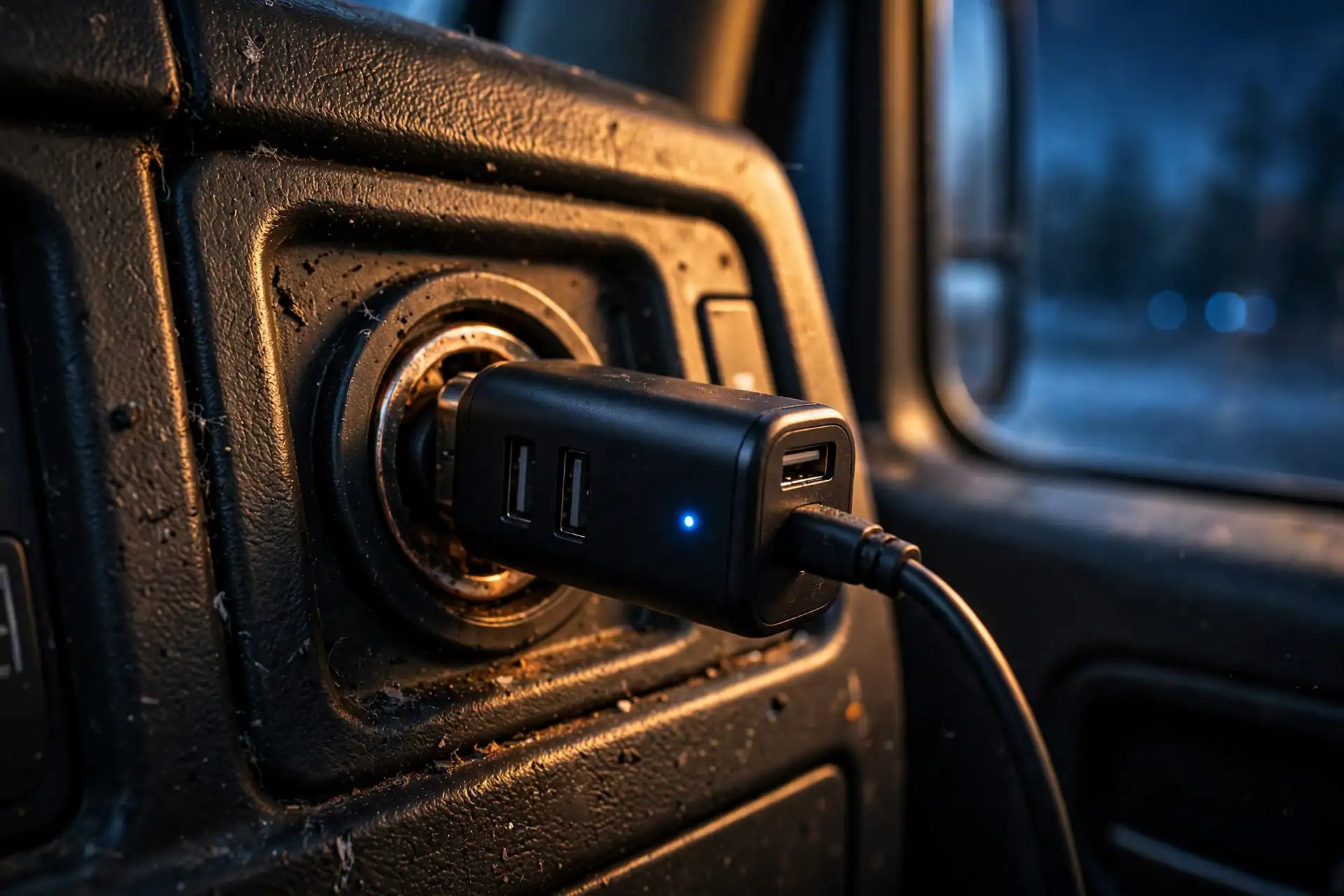
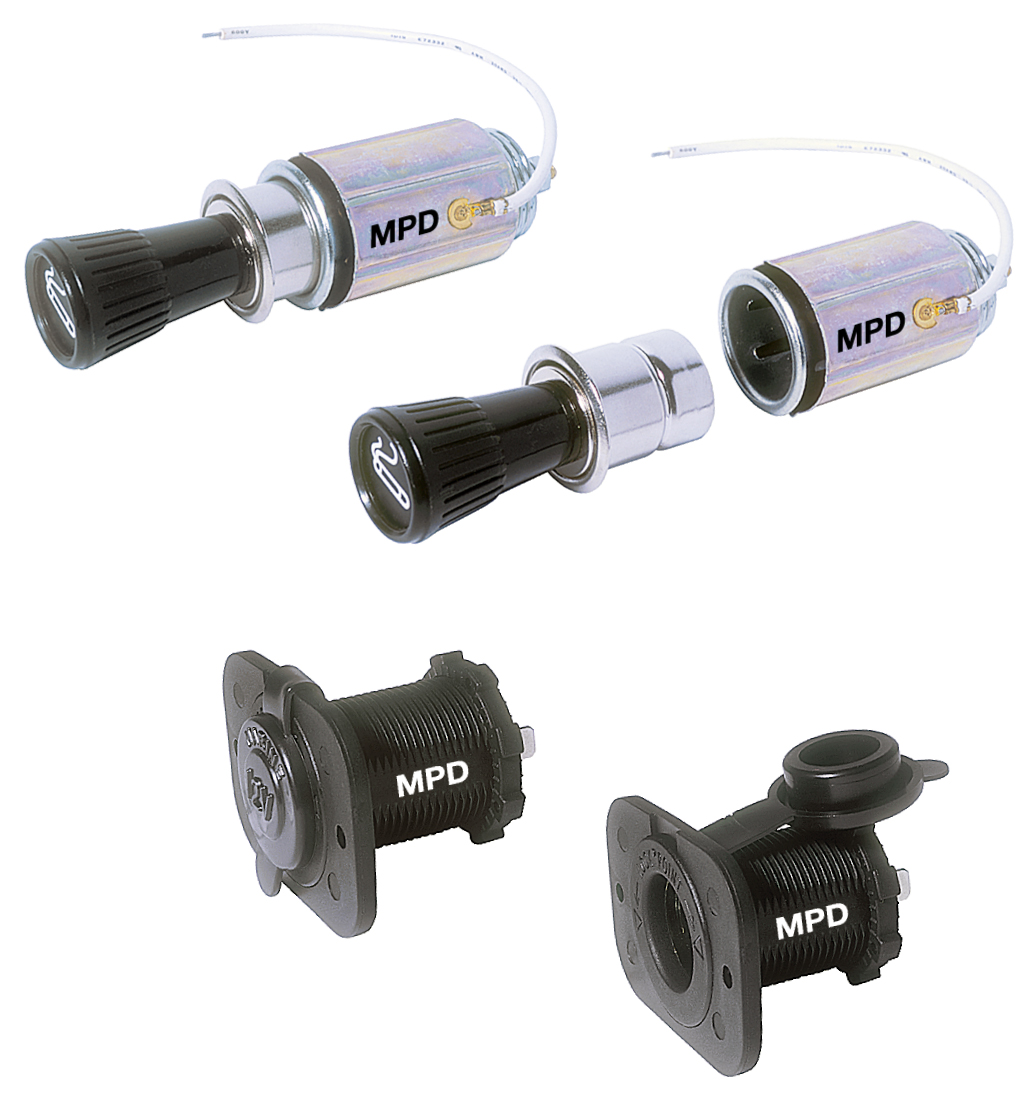
A high-output 12V drip brewer in this class draws around 170 watts. Divide by 12 volts and you get about 14 amps — nearly the entire capacity of a typical 15-amp 12V socket. That is why 12V brewers are fussy: run one on a dedicated socket with the engine running, and never through a splitter or shared with anything else. The full rules are in our 12V outlet safety guide.
An immersion heater sits at the opposite end: roughly 50 watts, or about 4 amps — the lowest-draw powered route. The catch is temperature. The one published spec sheet we could verify (a 57.6W RoadPro unit) tops out at 140°F, well below the roughly 195–205°F that proper coffee extraction wants. Lukewarm coffee, slowly — and with no verifiable Amazon.ca listing today, we would not send you hunting for one.
The manual methods draw zero amps and never blow a fuse. That is why they win on reliability, even though they need you to find hot water.
| Approach | Power draw | Brew time | Verdict |
|---|---|---|---|
| Self-heating espresso (OutIn Nano) | 0A from the socket while brewing — battery, recharged at 12V/24V | ~3–4 min heat per shot | Best powered pick. Real espresso, no socket stress. |
| High-output 12V drip brewer | ~14A (170W ÷ 12V) — nearly a full 15A socket | ~10–15 min | Works, but listings churn and the draw leaves no margin. No verified .ca pick today. |
| Manual press (AeroPress / French press) | 0A | ~2–4 min | The setup that never fails — if you can get hot water. |
| Battery-platform brewer (Makita) | 0A from the truck — runs on tool batteries | ~5 min per 5 oz cup | Only makes sense if you already own the batteries. |
| Immersion heater + press | ~4–5A | slow, and tops out lukewarm | Lowest draw, weakest coffee. No verified .ca listing today. |
If you are sizing the rest of your cab electrics, our 12V guide covers what a socket can actually run, and what size inverter a sleeper cab needs if you ever go the 120V route.
The picks
Four Options, Compared Honestly
Scores are provisional — based on published specs and buyer reviews, not hands-on testing.
OutIn Nano Portable Espresso Machine
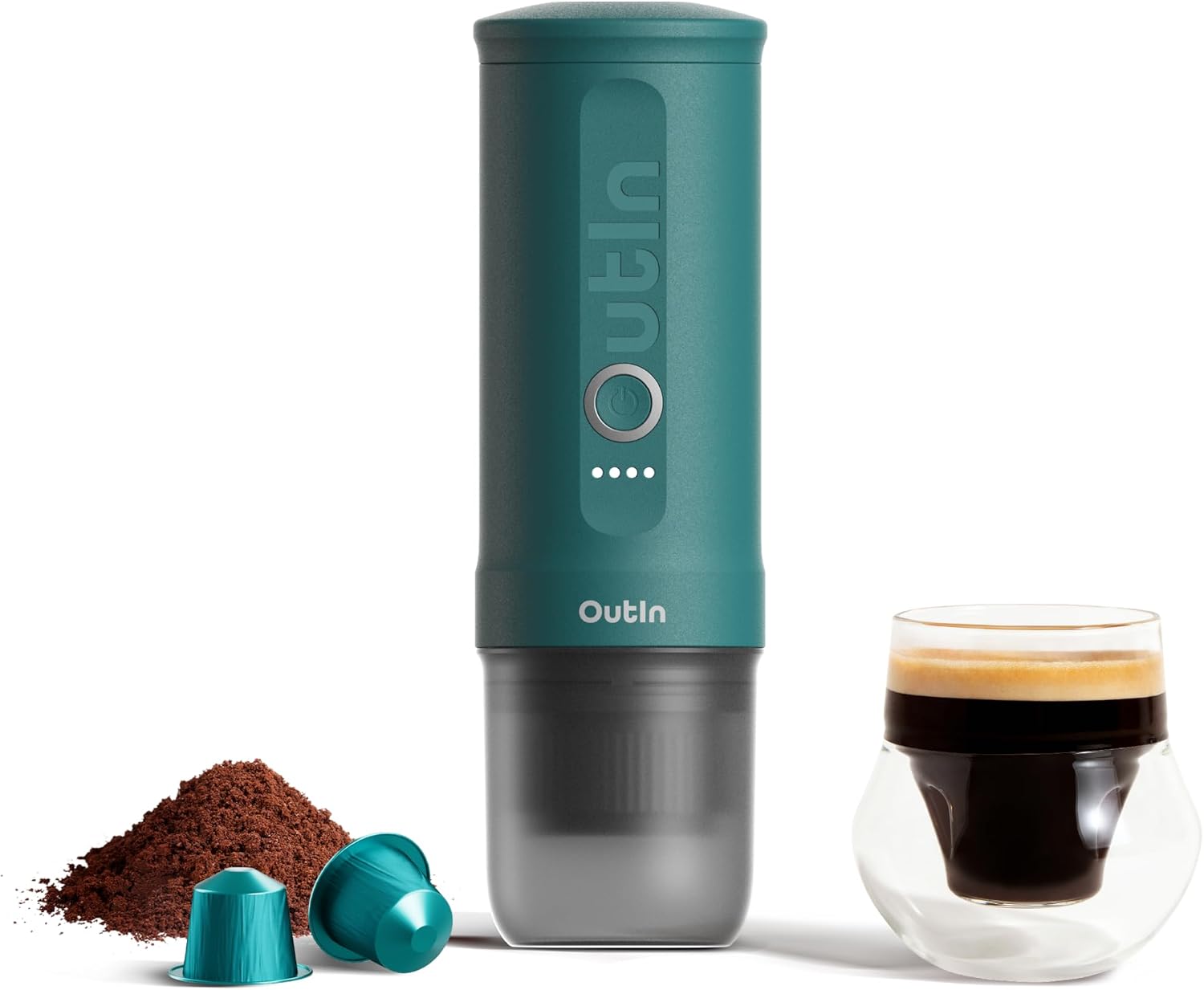
A battery-powered espresso maker that heats its own water and recharges off 12V/24V or USB-C — the closest thing to a real espresso machine that fits in a cup holder, and the only powered pick that never stresses the truck's socket while brewing.
Why it scores well
- Heats its own water: the 7,500mAh battery delivers 3–5 shots per charge on cold water, with about a 3–4 minute heat time.
- Charges from the truck: 12V/24V vehicle charging plus USB-C — top it up while you drive.
- Real espresso, not brown water: 20-bar extraction and 50–80 mL shots.
- Deep review base: 4.3 stars from 5,651 published ratings, In Stock on Amazon.ca.
Watch out for
- The priciest pick: $219.99 CAD — more than double the manual options.
- Espresso only: no drip pot here; team drivers wanting four cups will look at the Bodum.
- Not instant: each shot needs its 3–4 minute heat cycle.
- Battery
- 7,500mAh rechargeable, self-heating
- Charging
- 12V/24V vehicle + USB-C
- Pressure
- 20 bar
- Shot size
- 50–80 mL
- Shots per charge
- 3–5 (cold water)
- Ratings
- 4.3★, 5,651 published ratings
- Price
- $219.99 CAD, In Stock (September 2026)
AeroPress Go
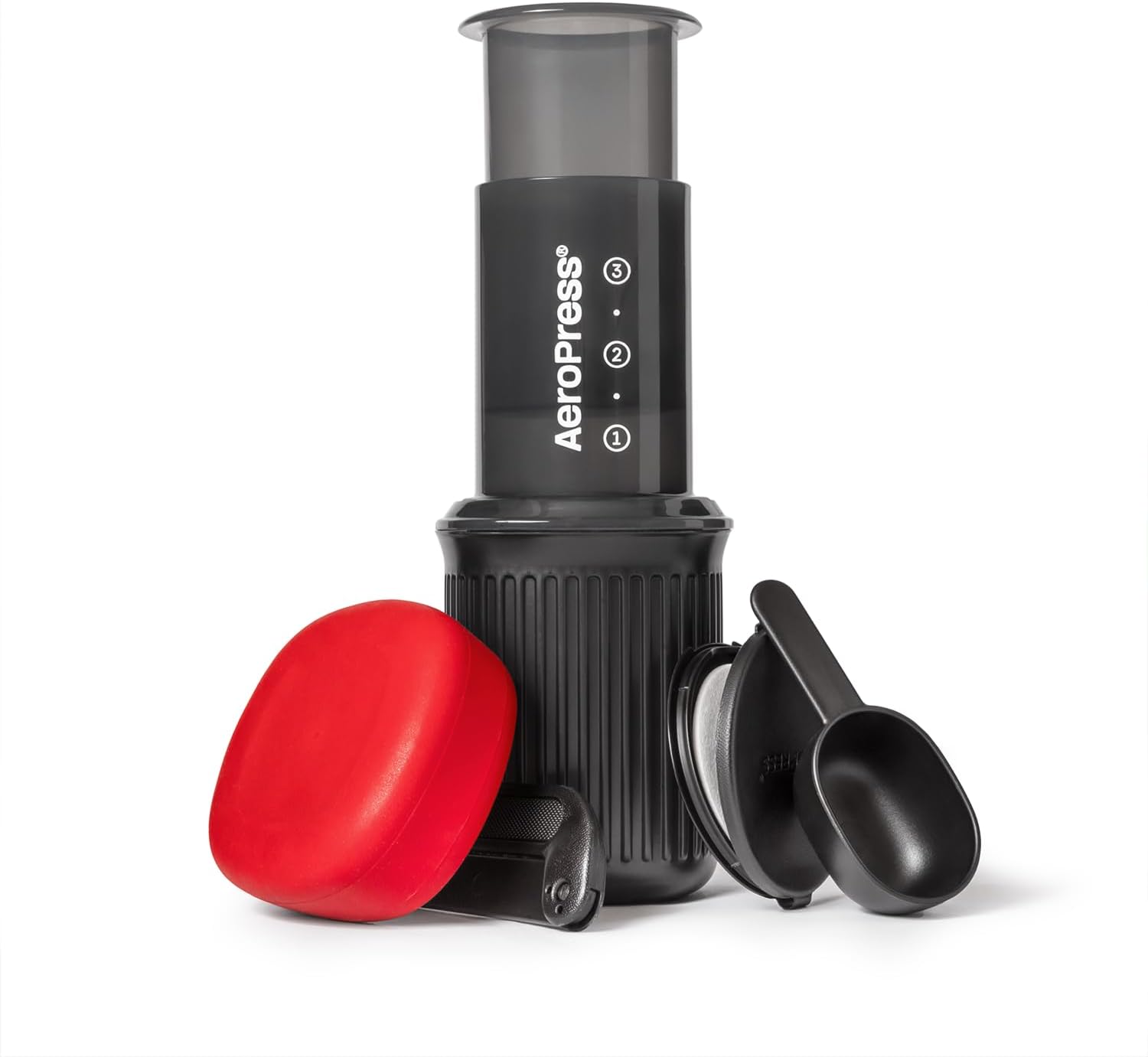
A manual press that brews in about two minutes and packs down into its own travel mug — the no-power setup that never blows a fuse, never needs charging, and fits in a door pocket.
Why it scores well
- Zero power draw: no socket, no battery, no inverter — nothing to fail.
- Fast and simple: brews and cleans up in about two minutes.
- Packs into itself: everything nests inside the included travel mug.
- Honest price: about $69.95 CAD new on Amazon.ca.
Watch out for
- You supply the hot water: rest stop, truck stop, or diner — no heater on board.
- Single servings: one cup at a time; not the pick for team drivers.
- Power
- None — fully manual
- Brew time
- About 2 minutes, plus cleanup
- In the box
- Press, travel mug with lid, scoop, stirrer, filters
- Price
- About $69.95 CAD new (September 2026)
Bodum chambord french press, 34 oz
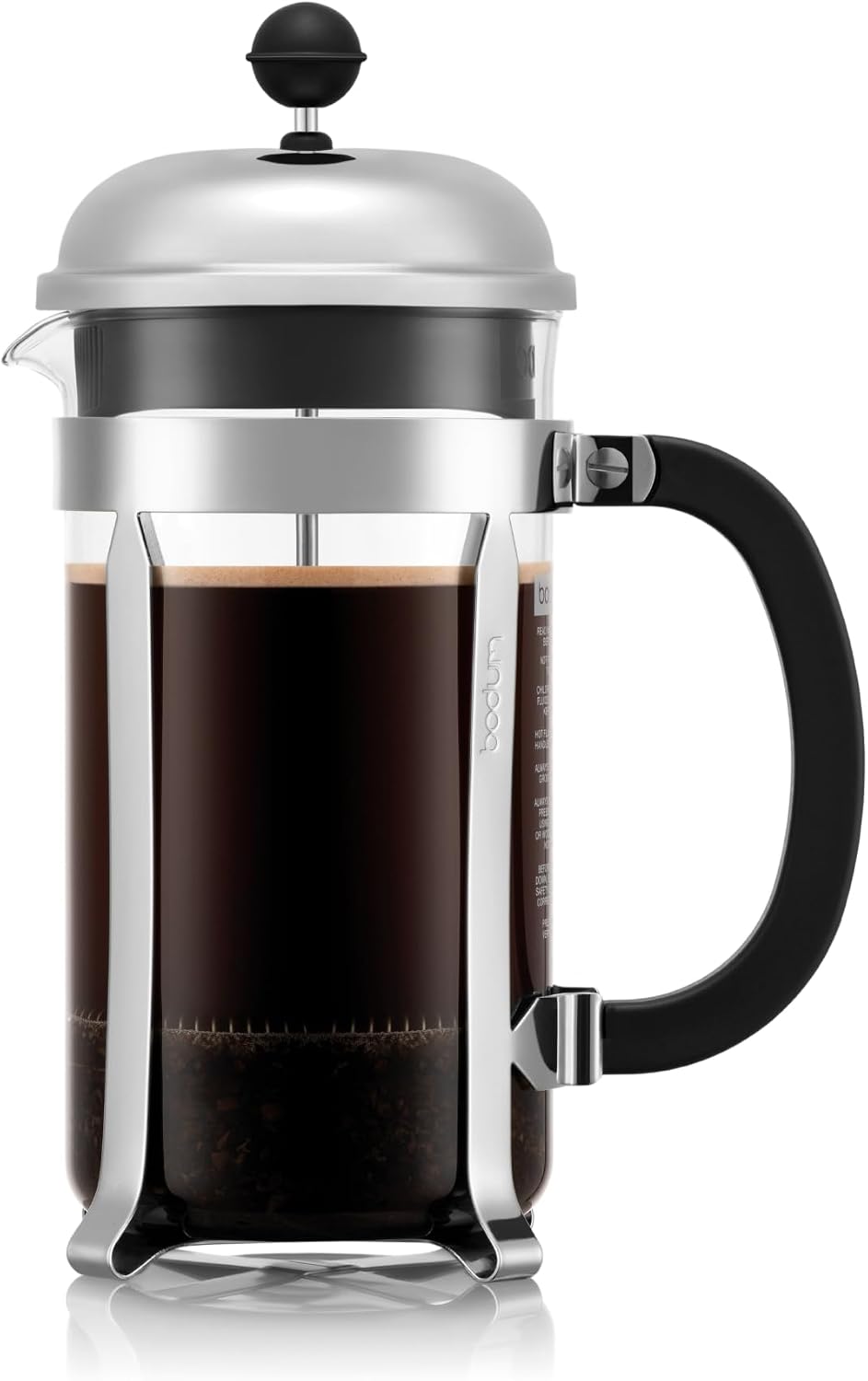
The classic one-litre French press — four cups at once for team drivers, with a 4.5-star average from nearly 13,000 published ratings. The glass beaker is the trade-off in a moving truck.
Why it scores well
- Brews for two: 34 oz / 1 litre — the only pick that serves a team driver and a co-driver.
- Massive review base: 4.5 stars from 12,969 published ratings.
- Nothing to break electrically: borosilicate glass beaker, stainless-steel plunger, no parts to fail.
Watch out for
- Glass in a moving truck: published reviews report cracked beakers — pad it well or leave it in the bunk while rolling.
- Thin availability: from $74.90 CAD via third-party sellers; the main Amazon.ca offer was unavailable at research time.
- Needs hot water and patience: a full four-minute steep, and you still supply the heat.
- Capacity
- 1 litre / 34 oz (about 4 cups)
- Steep time
- About 4 minutes
- Materials
- Borosilicate glass beaker, stainless-steel plunger
- Ratings
- 4.5★, 12,969 published ratings
- Price
- From $74.90 CAD via third-party sellers (September 2026)
Makita DCM501Z Cordless Coffee Maker
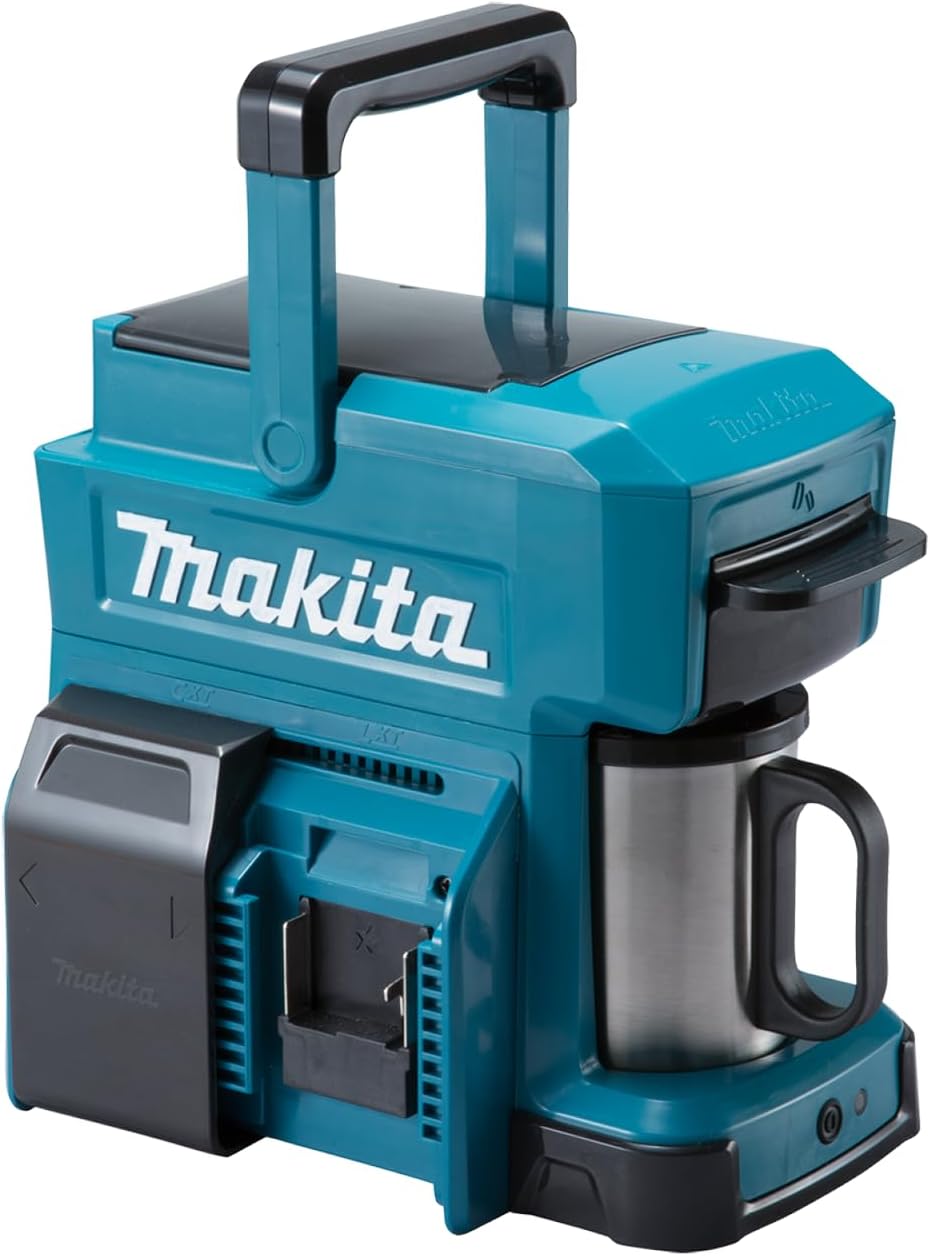
A jobsite coffee maker that runs on Makita 12V/18V batteries — a sensible pick if you already own the batteries, not a reason to buy into the platform for coffee alone.
Why it scores well
- Runs on tool batteries: Makita 12V MAX CXT or 18V LXT — zero draw from the truck.
- Decent output: a 5 oz cup in about 5 minutes, up to three cups on a 5.0Ah charge.
- Jobsite-tough: permanent filter and boil-dry protection; 4.3 stars from 2,808 ratings.
Watch out for
- Tool only: $179.00 CAD buys the brewer — battery and charger are sold separately.
- Small servings: 5 oz cups; espresso-sized by North American standards.
- Not a truck-socket device: this is a battery-platform pick, full stop.
- Power
- Makita 12V MAX CXT / 18V LXT battery (not included)
- Reservoir
- 240 mL
- Brew time
- 5 oz in about 5 minutes
- Cups per charge
- Up to 3 (with 5.0Ah battery)
- Ratings
- 4.3★, 2,808 published ratings
- Price
- $179.00 CAD, tool only, sold by Amazon.ca (September 2026)
How This Guide Was Made
Research-based. We did not test these hands-on. Scores come from published specs and driver reviews.
We compared four coffee options purchasable on Amazon.ca as of September 25, 2026 — one self-heating espresso maker, one manual press, one French press, and one battery-platform brewer — using manufacturer specifications and published buyer-review aggregates. Scores are our own, out of 20. Prices were approximate at research time and will change — the Amazon link shows the current price.
Two deliberate gaps, stated plainly. A 12V drip brewer (the Avigator, $113.30) was live at research time, but its listing returned “Page Not Found” hours later — 12V brewer listings churn, so we dropped it rather than link a dead page. And no 12V immersion heater had a verifiable, purchasable Amazon.ca listing today, so that method is explained in the power section instead of getting a product card.
Quick pick
Which One Is for You?
Best powered — OutIn Nano (15/20): self-heating espresso with 12V/24V charging, about $219.99 CAD. The pick if you want real coffee without touching the truck's socket.
Simplest reliable — AeroPress Go (14/20): no power, about two minutes, about $69.95 CAD. The setup that never fails — as long as you can find hot water.
Best for two — Bodum Chambord (13/20): a one-litre French press, from $74.90 CAD. Pad the glass beaker well in a moving truck.
Battery platform — Makita DCM501Z (12/20): $179.00 CAD tool-only. Only sensible if Makita 12V/18V batteries already live in your cab.
FAQ
Coffee Questions, Answered
Can I run a coffee maker off my truck's 12V socket?
Only a low-draw one. A high-output 12V drip brewer pulls around 14 amps — nearly a full 15-amp socket on its own. If you go that route, use a dedicated socket with the engine running and never a splitter. The full safety rules are in our 12V outlet safety guide.
What is the simplest reliable coffee setup for a truck?
An AeroPress Go and hot water from a rest stop, truck stop, or diner. Zero amps, nothing to charge, nothing to break, and it packs into its own mug. The only failure mode is a rest stop with no hot water — rare on Canadian highways.
Is a 12V immersion heater worth it?
It is the lowest-draw powered route at roughly 4–5 amps, but the published specs we verified top out around 140°F — below the temperature proper extraction wants — and we could not find a verifiable, purchasable Amazon.ca listing on September 25, 2026. Until a better unit is verified, it is not our pick.
My truck runs 24V — does that change anything?
The OutIn Nano charges on 12V or 24V, so it is fine either way. For anything else that is 12V-only, you need a 24V-to-12V step-down converter — never plug 12V gear straight into a 24V socket.
Do I need an inverter to make coffee?
Only for a 120V countertop machine. A 600–1000W pure sine wave inverter covers most small drip machines, but that is a lot of hardware for one cup. Our inverter sizing guide walks through matching watts to real loads if you go that way.
Keep reading