Comparisons · Seat comfort
Winter vs Summer Seat Cushions for Truck Drivers: Buy for the Season That Hurts You Most (2026)
Your memory-foam cushion that felt perfect in April turns into a heat trap by July and a wooden plank in a −30°C January. That is not a defect — it is physics. Here is what each season does to each cushion type, what actually works when it is −30 and when it is +35, and how to stop buying the wrong one.
Why Cushions Are Seasonal by Physics, Not by Marketing
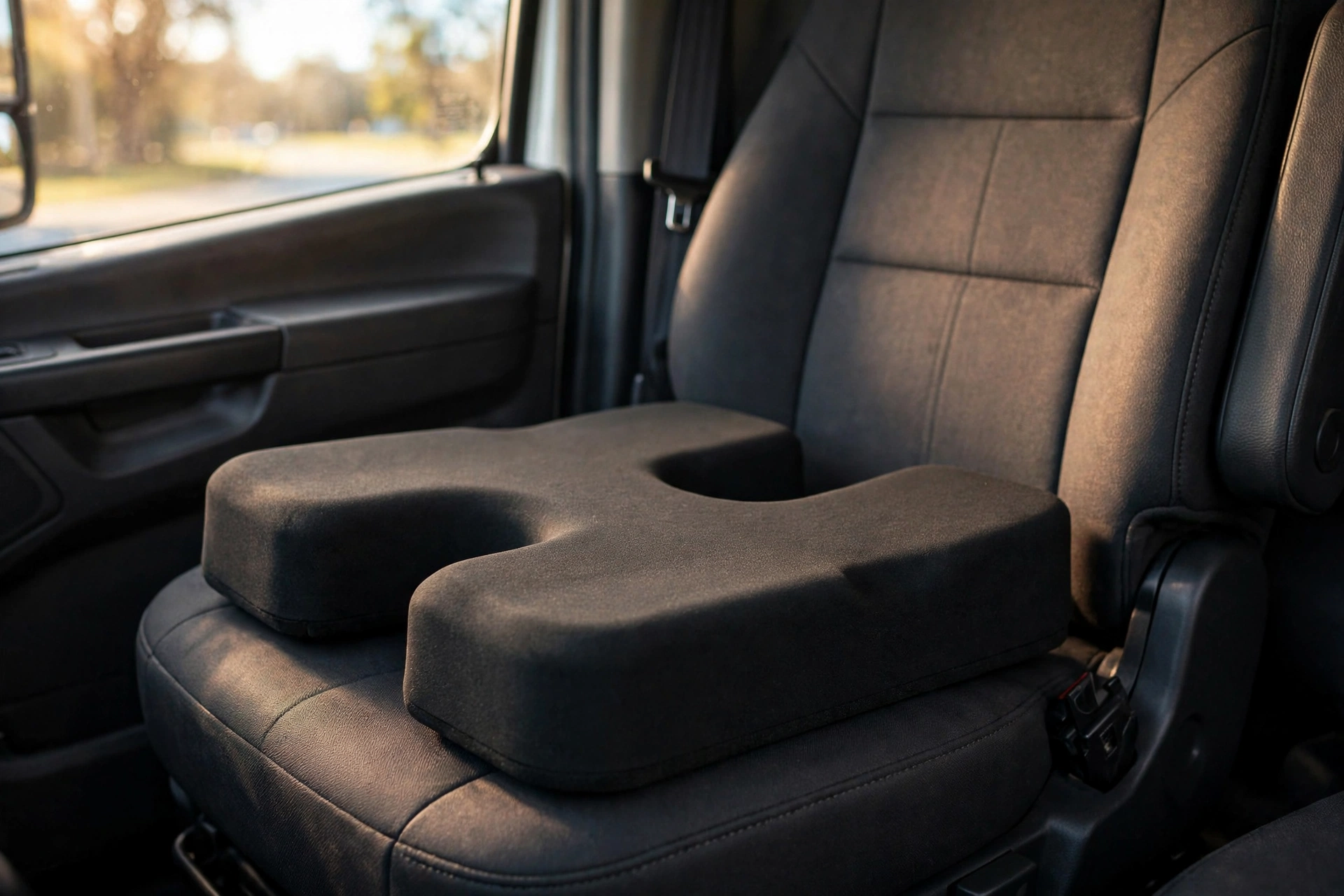
Seat-cushion materials respond to temperature, and memory foam is the most dramatic example. Viscoelastic foam softens in heat and firms up in the cold: reviewers in northern climates report a foam cushion feeling hard for the first 10–15 minutes of driving after a cold night, then softening as body heat works into it. In extreme summer heat the same foam can go almost too soft and lose support.
Heat retention is the other half of the problem. Memory foam is a dense insulator — one clinician-led comparison rated it just 2 out of 5 for cooling, noting that sitters consistently reported feeling hotter on foam, because the material traps body heat against you for hours. Gel works the opposite way: it is thermally conductive, so it draws heat away from your body and feels cool to the touch. But conduction cuts both ways — that same property is why a gel cushion feels shockingly cold when you sit on it in a freezing cab.
The cover matters as much as the core. A breathable mesh cover that vents heat in July becomes a cold-air leak in January. A plush, insulating cover that feels great in winter becomes a sweat trap in summer. This is why no single cushion wins both seasons — you are choosing which season to optimize for, or running two setups.
Winter: What Goes Wrong (and What Actually Works)
In a parked truck at −25°C, everything in the cab is −25°C, including your cushion. Memory foam at that temperature is a firm slab until your body heat softens it — plan on the first stretch of your shift being the least comfortable. Gel honeycomb cushions are worse on first contact: the conductive gel that cools you in summer pulls heat away from you in winter, and several winter-driving reviewers describe the first sit-down as genuinely unpleasant.
What actually works in winter is adding heat rather than changing foam:
- A 12V heated seat cushion. Heating the driver directly is the most efficient warmth in a vehicle — a heated cushion warms you in minutes while the cab air is still freezing. The best heated seat cushions for winter driving we ranked run on confirmed 12V power with seat-plus-back coverage; our top pick, the CARSHION heated seat cover, publishes actual heat settings (107°F low / 136°F high), which is rare in this category. Know how these pads actually fail before you buy.
- A closed or fleece cover over your summer cushion. If you run a breathable mesh cushion in summer, throw a denser cover over it for winter — or just accept that the mesh cushion goes in the closet from November to March.
- Keep the foam, add the heat. Your regular memory-foam cushion is fine in winter once it warms up. The heated layer underneath does the real work.
Winter pick
CARSHION 12V heated seat cover — confirmed 12V power, named heat settings, seat-plus-back coverage. Read the full heated-cushion ranking for the budget and team-driver options.
Summer: What Goes Wrong (and What Actually Works)
July is where memory foam earns its bad reputation. The dense foam that supports you in April becomes a thermal trap when the cab is 35°C — reviewers consistently describe sweat-soaked shirts and overheating after long sits, and leather or vinyl seats make it worse because nothing breathes. Truckers have been improvising summer fixes on forums for years, and the pattern is clear: anything that reduces skin-to-seat contact area helps.
What actually works in summer, from most to least effective:
- A 12V ventilated cooling seat cover. A fan (or several) built into the cover pushes air between you and the seat. These run about $60–90 CAD, plug into the 12V socket, and several draw under 15W. The honest caveats from reviews: the fans are audible, and moving air is not air conditioning — it fights sweat, not 40°C ambient. For a leather seat in July, it is the only active fix.
- A gel-honeycomb cushion. Silicone honeycomb lets air move through the structure while the gel conducts heat away. It is the best passive (no-power) summer option, and unlike foam it does not trap heat. Pair it with a mesh cover so the absorbed heat can actually escape.
- A beaded wooden seat cover. The old trucker standby: beads hold your back off the seat so air circulates. Drivers on trucking forums confirm the airflow works — and also report the downsides honestly: the nylon threading eventually breaks and scatters beads everywhere, and the varnish wears off until the beads start to smell. Cheap ($25–40), effective, disposable. A summer stopgap, not an investment.
- An air-cell cushion (Roho/Airhawk style). Medical-grade air cells distribute pressure through finger-like protrusions, which reduces contact area and lets air move. Expensive, but drivers who run them swear by the cooling effect.
Winter vs Summer Setups, Compared
| Setup | Winter behavior | Summer behavior | Price (CAD, approx.) | Power draw | Best for |
|---|---|---|---|---|---|
| 12V heated cushion + foam cushion | Direct warmth in minutes | Too hot — store it for summer | $45–65 + your existing cushion | ~36–48W from the 12V socket | Canadian winter, Oct–Apr |
| Gel-honeycomb cushion, mesh cover | Cold shock on first sit | Best passive cooling, real airflow | $40–70 | None | Summer without wiring anything |
| 12V ventilated cooling cover | Useless — adds cold airflow | Strongest active sweat relief | $60–90 | ~10–15W fan | Leather seats, southern summer runs |
| Beaded wooden cover | Cold, hard beads — miserable | Good airflow, cheap | $25–40 | None | Budget summer stopgap |
| Plain memory-foam cushion | Firms up, needs 10–15 min to soften | Heat trap — 2/5 cooling rating | $40–60 | None | Shoulder seasons, mild climates |
Durability notes worth knowing before you buy: heated cushions most often fail at the wiring and heating element, so check for published overheat protection; ventilated covers most often fail at the fans, which get noisy before they die; beaded covers fail at the threading, which is why truckers treat them as seasonal disposables. Foam itself lasts longest but loses support gradually — if your cushion has flattened after a year of 10-hour days, that is normal wear, not a warranty issue.
Seasonal Cushion Questions, Answered
Will my memory-foam cushion crack at −40°C?
No — but it will feel like a wooden plank until it warms up. Viscoelastic foam firms in the cold and softens with body heat; reviewers report roughly 10–15 minutes of driving before it softens. Give it that time before judging the comfort, or pre-warm the cab.
Can I run a heated cushion off the 12V socket all shift?
Yes — a typical 12V heated cushion draws around 3–4 amps, well within what a cab socket handles while the engine runs. Overnight with the engine off is a different question; check what you can safely run in your truck before leaving anything powered while parked.
Do 12V ventilated seat covers actually work, or is it a gimmick?
They work at what they claim: moving air between you and the seat, which cuts sweat dramatically. They do not lower the temperature like air conditioning. Reviewers consistently praise the sweat relief and consistently complain about fan noise. For a leather seat in July, it is the best active option short of a ventilated factory seat.
Is there really no cushion that works year-round?
Not honestly. Materials that insulate you in January trap heat in July — that is the same property, not two different ones. The closest year-round answer is a gel-honeycomb cushion with a mesh cover for summer, plus a heated 12V cushion layered in for winter. Two pieces, all twelve months.
How This Comparison Was Made
Research-based. We did not test these hands-on. This comparison is built from published material specs, clinician-led cushion comparisons, patterns in 3-star Amazon reviews, and years of trucker forum threads about summer sweat and winter cold. This guide contains affiliate links to Amazon.ca. As an Amazon Associate I earn from qualifying purchases. Prices are approximate, in CAD, and change often — check the live listing before you buy.
Sources
- Axial Chairs — clinician comparison of cushion foams for cooling (memory foam rated 2/5)
- TruckersReport forums — seat cover and hot-seat threads (beaded covers, ventilation, durability reports)
- Expedite Trucking forums — summer seat-cooling discussion (Airhawk/Roho air-cell cushions)
- Farm Show Magazine — 12V ventilated “Summer Seat” field report
- Our own testing-framework guides: memory foam vs gel and best heated seat cushions