Reviews · Cab Cooking
How to Cook Real Food in the Truck: 12V Oven vs Microwave vs Air Fryer
Any of these four will get you fed without a truck-stop counter — pick by your power budget, not by the appliance’s looks. The Koolatron 12V lunch box stove is our best overall pick: it plugs straight into the 12V socket, needs no inverter, and cooks or reheats up to 300°F. If speed matters more, a 700W microwave on a proper inverter reheats in minutes — and a mini air fryer only makes sense if you already run a big inverter and idle or have shore power.
Research-based. We did not test these hands-on. Scores come from published specs and driver reviews. This guide contains affiliate links to Amazon.ca. As an Amazon Associate I earn from qualifying purchases. Prices are approximate, in CAD, and change often — check the live listing before you buy.

Why it matters
Power Math First, Appliances Second
Cooking in the truck is a power question before it is a food question. Every appliance below is honest about the same physics: a 12V socket circuit is fused at about 15 amps — roughly 180 watts — and anything over about 150 watts has to be hardwired to the battery bank, never run off the lighter socket.
Here is what each method actually pulls, from the wall side to the battery side:
| Method | Power draw | What it needs | Price (CAD, approx) |
|---|---|---|---|
| 12V lunchbox oven | about 9A peak (108W) off 12V | Just the 12V socket | about $60 |
| 12V slow cooker | socket-powered, low draw | Just the 12V socket | about $75 |
| Microwave (700W cooking) | about 1,050W input — roughly 100A from the batteries | 1,500–2,000W hardwired pure-sine inverter | about $80–$130 |
| Mini air fryer (900W) | 900W — roughly 85A from the batteries | 1,500W+ inverter, engine running or shore power | about $69 |
The brutal version: cooking watts are not input watts. A 700W-cooking microwave pulls over 1,000W to make that heat, and the magnetron’s startup surge can briefly reach two to three times that — which is why the driver-tested answer for a 700W microwave is a 1,500–2,000W continuous inverter, hardwired with heavy cable and a fuse, pure sine. And an air fryer off a stock 12V socket is a non-starter: 900W is roughly 75–85 amps against a 15-amp fuse. The fuse blows at best; a melted plug is the worst case.
The picks
Four Ways to Cook in the Cab, Compared Honestly
Scores are provisional — based on published specs and buyer reviews, not hands-on testing.
Best overall
Koolatron 12V Heating Lunch Box Stove
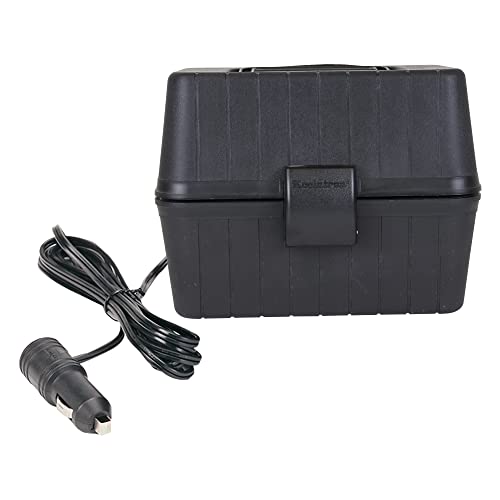
The classic lunchbox oven: a 1.6-quart (1.5 L) portable stove that plugs into the 12V socket and cooks or reheats up to 300°F — no inverter, no hardwiring, from a Canadian company.
Why it scores well
- Real cooking heat off the socket: heats to 300°F (149°C) — enough for foil-pan meals, canned food, pizza, and burgers, straight from the 12V receptacle.
- Canadian company: Koolatron is an Ontario-based brand, easy to buy and return in Canada — about $60 CAD on Amazon.ca (list $74.99).
- Sane power draw: draws up to about 9 amps during warm-up and averages less, per the manufacturer’s documentation — comfortably inside a fused 12V socket circuit.
- Road-proof design: secure clasp, cool-touch handle, red LED power indicator, 6 ft cord that wraps around built-in storage hooks, and a food-safe aluminum interior that wipes clean.
- Published driver base: about 4.2 out of 5 stars from over 100 published ratings, with 100+ buyers in the past month.
Watch out for
- It is slow: a lunchbox oven is not a microwave — think tens of minutes, not minutes. Plug it in at a fuel stop, not when you are already hungry.
- Bottom and sides get very hot: the manufacturer warns the unit gets extremely hot in use and can leak if knocked over — keep it upright and let it cool before stowing.
- Not for driving: Koolatron’s own manual says do not use it while driving — cook at stops and breaks.
- Capacity
- 1.6 qt (1.5 L)
- Max temp
- 300°F (149°C)
- Power
- 12V, up to about 9A peak
- Cord
- 6 ft (1.8 m) 12V, wraps around built-in hooks
- Interior
- Food-safe aluminum, wipes clean
- Safety
- Secure clasp, cool-touch handle, red LED power indicator
- Ratings
- about 4.2★, 100+ published ratings
- Price
- about $60 CAD (list $74.99), varies
BLACK+DECKER EM720CB7 700W Microwave
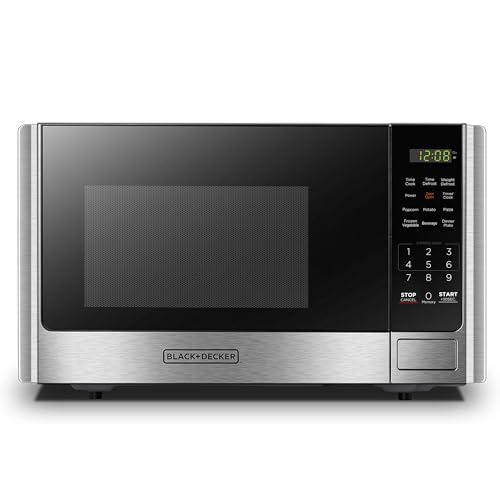
A 0.7 cu ft, 700W compact microwave — the fastest way to eat in the cab. But it is an inverter appliance: budget for a 1,500–2,000W hardwired pure-sine inverter before you buy the microwave.
Why it scores well
- Minutes, not tens of minutes: leftovers and frozen meals in 2–5 minutes — nothing 12V comes close on speed.
- Compact cab fit: 0.7 cu ft with a 10-inch turntable; about 17.3″ wide — it actually fits a sleeper shelf.
- Huge published base: about 4.2 out of 5 stars across tens of thousands of published ratings and over 22,000 units sold on the Canadian marketplace listing.
- Simple controls: 10 power settings, one-touch presets (popcorn, potato, pizza, frozen vegetable, beverage, dinner plate), child safety lock, push-button door.
Watch out for
- The inverter is the real purchase: 700W of cooking needs about 1,050W of input and a 1,500–2,000W continuous pure-sine inverter, hardwired — a 1,000W plug-in unit will fault on the magnetron’s startup surge.
- Modified sine costs you half your cooking: on modified sine a microwave can cook at roughly half power while still pulling full draw from the batteries — pure sine is the honest pairing.
- Price moves around: seen between about $80 and $130 CAD on Amazon.ca at research time — check the live listing.
- Cooking power
- 700W (10 power settings)
- Rated input power
- about 1,050W
- Capacity
- 0.7 cu ft, 10″ turntable
- Size
- about 17.3″ W × 13″ D × 10.2″ H
- Voltage
- 120V — needs an inverter in the truck
- Extras
- Child safety lock, push-button door, kitchen timer
- Ratings
- about 4.2★, very large published review base
- Price
- about $80–$130 CAD, varies
RoadPro RPSL-350 12V Slow Cooker
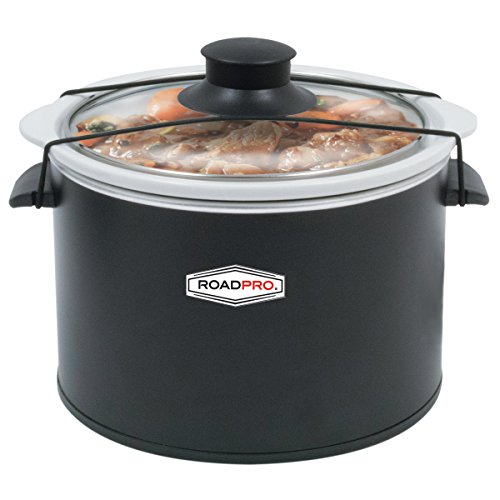
A 1.5-quart 12V slow cooker that plugs into the power socket — the set-and-forget pick for chili, stew, and soup while you drive.
Why it scores well
- True slow cooking off the socket: plugs directly into the 12V power port — warms and cooks between 140°F and 170°F, no inverter anywhere.
- Set it and drive: load it at the start of your shift and eat hot chili at the fuel stop — 1.5-quart stoneware crock is a real single-driver portion.
- Easy cleanup: removable dishwasher-safe stoneware crock, glass lid held down by a stretch cord for travel, easy-grip carry handles.
- Established review base: about 4.0 out of 5 stars from nearly 700 published ratings.
Watch out for
- Slower and cooler than the lunchbox oven: 140–170°F will not crisp or brown anything — this is a stew-and-chili machine, not an oven.
- Costs more than the Koolatron: about $75.45 CAD on Amazon.ca at research time, for a narrower job.
- Plan the day around it: slow cooking takes hours — great for dinner, useless for a quick lunch.
- Capacity
- 1.5 qt stoneware crock (removable, dishwasher safe)
- Cook temp
- warms/cooks 140–170°F
- Power
- 12V, plugs into lighter/power socket
- Cord
- 6 ft power cord
- Lid
- Glass lid with stretch cord for travel
- Size
- about 22.6 × 11.7 × 23.9 cm
- Ratings
- about 4.0★, nearly 700 published ratings
- Price
- about $75.45 CAD, varies
COSORI Lite 2.1-Quart Mini Air Fryer
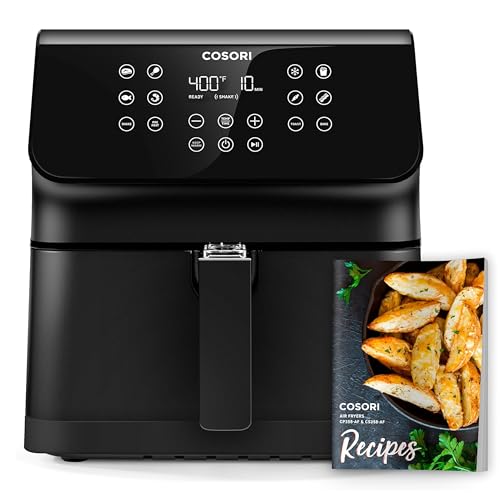
A 900W, 2.1-quart mini air fryer — the crispiest food of the four, and by far the most demanding. Only buy this if you already run a serious inverter.
Why it scores well
- Real air-fryer results: 170–400°F with Air Fry, Roast, Bake, and Reheat — crispy fries, wings, and reheated pizza no 12V device can touch.
- Smallest footprint here: 10.1 × 8.3 × 10.5 inches and under 5 lb — it stows in a sleeper without a fight.
- Quiet and easy to clean: under 48dB in operation, nonstick dishwasher-safe accessories, automatic shutoff.
- Fair Canadian price: about $68.56 CAD on Amazon.ca (list $79.99) at research time.
Watch out for
- 900W is the whole story: roughly 85 amps from the battery side through an inverter — a 12V socket is a non-starter, and a small plug-in inverter will fault.
- Needs a serious electrical setup: realistically a 1,500W+ continuous inverter, hardwired, and you should only run it with the engine on or on shore power — 20 minutes at 85A is a real bite out of a battery bank.
- Smallest portions: 2.1 quarts feeds one driver — that is the whole point, but it is not a family cooker.
- Capacity
- 2.1 qt / 2.0 L
- Power
- 900W, 120V AC — needs a big inverter
- Temp range
- 170–400°F
- Functions
- Air Fry, Roast, Bake, Reheat
- Noise
- under 48dB
- Size
- about 10.1 × 8.3 × 10.5 in, 4.87 lb
- Extras
- Crisper plate, auto shutoff, 30 in-app recipes
- Price
- about $68.56 CAD (list $79.99), varies
How This Guide Was Made
Research-based. We did not test these hands-on. Scores come from published specs and driver reviews.
We compared four cooking options available to Canadian buyers — two 12V socket devices, one compact microwave, and one mini air fryer — using manufacturer specifications and published buyer-review aggregates as of September 2026. Scores are our own, out of 20. Prices were approximate at research time and will change — the Amazon link shows the current price.
How to use it
The Lunchbox-Oven Playbook: Foil Pans, Cans, and Four Real Meals
The lunchbox oven is the most-asked-about cab cooker on driver forums for a reason: it is the only way to COOK — not just warm — without an inverter. Here is how drivers actually use it:
- Cook in foil, not in the box: line the oven with disposable aluminum foil pans or wrap food in foil — cleanup drops to nearly zero and the box lasts longer.
- Water bath for cans and jars: set cans or jars in a little water inside the oven for even heating — and always puncture cans and open jars first so steam can escape.
- Keep it upright and cool it down: the bottom and sides get extremely hot and the unit can leak if knocked over — leave it level, and let it cool before stowing.
- Park it to cook: manufacturers warn against using it while driving — plug it in at fuel stops and breaks, then eat when it is done.
Four driver-tested meals, roughly timed:
- Truck-stop chili remix (about 20 minutes): a can of chili in a foil pan, topped with shredded cheese and crushed crackers at the end.
- Chicken and rice (about 30–40 minutes): pre-cooked rice, canned chicken, and a spoonful of cream-of-mushroom soup mixed in a foil pan.
- Quesadillas (about 10–15 minutes): tortilla, shredded cheese, and canned chicken folded in foil — flip once until the cheese melts.
- Hot dogs and wraps (about 5–10 minutes): the fastest thing a lunchbox oven does — wieners, smokies, or a breakfast wrap, straight in foil.
Pair hot food with real coffee and the cab is a kitchen: our coffee guide for truck drivers covers the 12V brewing side.
Quick pick
Which One Is for You?
Best overall — Koolatron 12V Lunch Box Stove (15/20): the no-inverter pick — 300°F of real cooking heat off the 12V socket, about $60 CAD, from a Canadian company.
Fastest meals — BLACK+DECKER EM720CB7 Microwave (14/20): the speed pick — 700W of real microwave cooking, but only after a 1,500–2,000W hardwired pure-sine inverter.
Set-and-forget — RoadPro RPSL-350 Slow Cooker (13/20): the chili pick — 1.5 quarts of stoneware slow cooking off the socket while you drive, about $75 CAD.
Crispiest — COSORI Lite 2.1-Qt Air Fryer (12/20): the power-hungry pick — 900W of genuine air-fryer results, only for trucks that already run a big inverter.
One tip from the road: cook at the fuel stop, not the rest stop. A lunchbox oven or slow cooker plugged in while you fuel, stretch, and walk the dog is dinner by the time you climb back in — no extra waiting, no cold food, no idling just to eat.
FAQ
Cab Cooking Questions, Answered
Can I run an air fryer off the 12V socket?
No. A 900W air fryer pulls roughly 75–85 amps from the 12V side — a cigarette-lighter circuit is fused at about 15 amps. The best case is a blown fuse; the worst case is a melted plug. Air fryers are inverter-only appliances, full stop.
What size inverter do I need for a 700W truck microwave?
A 1,500–2,000W continuous inverter, pure sine, hardwired directly to the batteries with heavy cable and a proper fuse. The 700W number is cooking power — the box draws about 1,050W, and the magnetron’s startup surge can briefly hit two to three times that. See our inverter sizing guide for the full math.
Can I leave a 12V oven plugged in overnight?
Don’t. A lunchbox oven draws up to about 9 amps while heating — left on overnight it will flatten your batteries. Run it while you are driving or idling, eat, then unplug. Overnight heat belongs to socket-safe devices with tiny draws.
Is a RoadPro-style lunchbox oven actually worth it?
Yes — if you want hot, real food without buying and wiring an inverter. It is the only pick here that cooks with zero electrical work. But it is slow: think tens of minutes. If speed is the priority and you already run a big inverter, a microwave wins every time.
Slow cooker or lunchbox oven — which is better for a truck?
Different jobs. A slow cooker (like the RoadPro RPSL-350) is for set-and-forget stews, chili, and soup at 140–170°F over hours. A lunchbox oven (like the Koolatron) reaches 300°F, so it reheats frozen meals, cooks foil-pan food, and handles pizza and cans. Many drivers end up with both; if you buy one, match it to what you actually eat.
Can I cook while driving?
Manufacturers say no — Koolatron’s own manual warns against using the lunchbox stove while driving. Hot food, a hot box, and a moving truck are a bad combination. Plug in at fuel stops and breaks; the food is ready when you climb back in.
Keep reading