Cab care
How to get the smell out of your truck cab
Updated September 2026
Short answer: find the source, then remove it — air fresheners are not the protocol. Whether it is a previous smoker's tractor, month-old food smells, or a mildewy HVAC, a stinky cab is fixable with a weekend of methodical work. Masking it just layers perfume over the problem.
Research-based. We did not test these hands-on. Scores come from published specs and driver reviews. No scores were assigned here — the advice is the point, and the gear section at the end is short on purpose.
Key takeaways
- Diagnose before you deodorize. Smoke, mildew, food, pet, and wet-gear funk each live in different places and need different fixes.
- The cabin and bunk air filters are the forgotten fix. A filter that has been breathing someone else's smoke for a year re-smokes the cab every time the fan runs.
- Wash what washes, wipe what doesn't. Fabrics hold odour; hard surfaces just need a wipe-down with an all-purpose cleaner.
- Air it out fully at the end. Hours of open doors and windows do more than any spray.
- Prevention is a routine, not a product: trash at every fuel stop, a sealed laundry bag, and wet gear out of the living space.
Step one
Find the source first
Every failed deodorizing attempt starts the same way: spraying something before knowing what the smell is. Do the sniff test, zone by zone, with the HVAC both off and running:
Smoke lives in fabrics — curtains, mattress, seat covers, headliner — and in the HVAC filter and ducts. If the smell spikes when the fan kicks on, the ventilation system is a reservoir.
Mildew smells earthy and musty and usually means the A/C drain or the evaporator — that sour blast when the air first starts is the giveaway.
Food and spill funk hides under the bunk, behind the seats, and in the floor mats. Check the dark corners with a flashlight before you assume it is something exotic.
Wet-gear and body odour soak into the mattress and bedding. If the truck came with the previous driver's mattress, that mattress is the smell — budget to replace it rather than rescue it.
The method
The protocol
Work in this order. Each step removes a reservoir; skipping one leaves the smell with somewhere to hide.
1. Remove the sources. Empty every compartment, bin, and door pocket. Throw out old food, forgotten trash, and anything you cannot identify. Pull the laundry — all of it — into a sealed bag and wash it at the next stop. If the mattress came with the truck and smells like the previous driver, replace it; see our sleeper mattress guide before you buy.
2. Wipe the hard surfaces. Dash, door panels, steering wheel, handles, window cranks, the fridge interior — an all-purpose cleaner and a microfibre cloth. Smoke film coats everything, including the inside of the windows; do the glass too.
3. Wash what washes. Curtains, seat covers, mattress protector, bedding — hot water if the fabric allows. Baking soda sprinkled on carpet and upholstery, left for an hour, then vacuumed, takes the edge off embedded odour honestly and cheaply.
4. Change the air filters. Cabin filter and bunk filter both, with fleet approval if it is a company truck. This is the single most-skipped step and often the single biggest improvement — a smoke-seasoned filter re-contaminates the cab every time the fan runs.
5. Treat the vents. With the fan on high and the system on fresh air, a disinfecting spray into the exterior intake (at the base of the windshield on most tractors) works through the ducts. Then air the cab out thoroughly before you sleep in it — open doors and windows and let it breathe.
6. The full air-out. However good the cleaning went, finish with hours of open doors and windows on a dry day. Moving air does what no chemical does.
Save your money
What does not work
Hanging air fresheners are perfume over garbage — they fade in days and the underlying smell walks right back in. Fine as a finishing touch after the protocol, useless as the protocol.
"Funk bombs" and foggers are overkill for a cab: they coat every surface in chemical residue, and you still have to ventilate for hours afterward. For a space you sleep in, the manual protocol above is safer and more effective.
Ozone generators come up in every forum thread, so here is the honest version: they can knock down odour, but the cab must be empty while it runs and thoroughly aired afterward, and ozone is hard on rubber and electronics with repeated use. Most drivers do not need one — the filter change and the air-out do the real work.
Staying fresh
Keep it from coming back
A clean cab stays clean on routine, not products. Trash out at every fuel stop — it takes ninety seconds and it is the whole game. Keep a sealed laundry bag so worn clothes never sit open in the bunk. Wet gear lives outside the living space — side box, or hung where it can drip and dry. Crack the windows when parked on dry days; a cab that breathes does not go stale. And the one the forums repeat like a mantra: if you cook in the truck, ventilate like you mean it — some smells never fully leave fabric.
The footnote
If you need gear
Deodorizing is labour, not shopping — but two buys support the protocol honestly:
Generic 12V clip-on fan
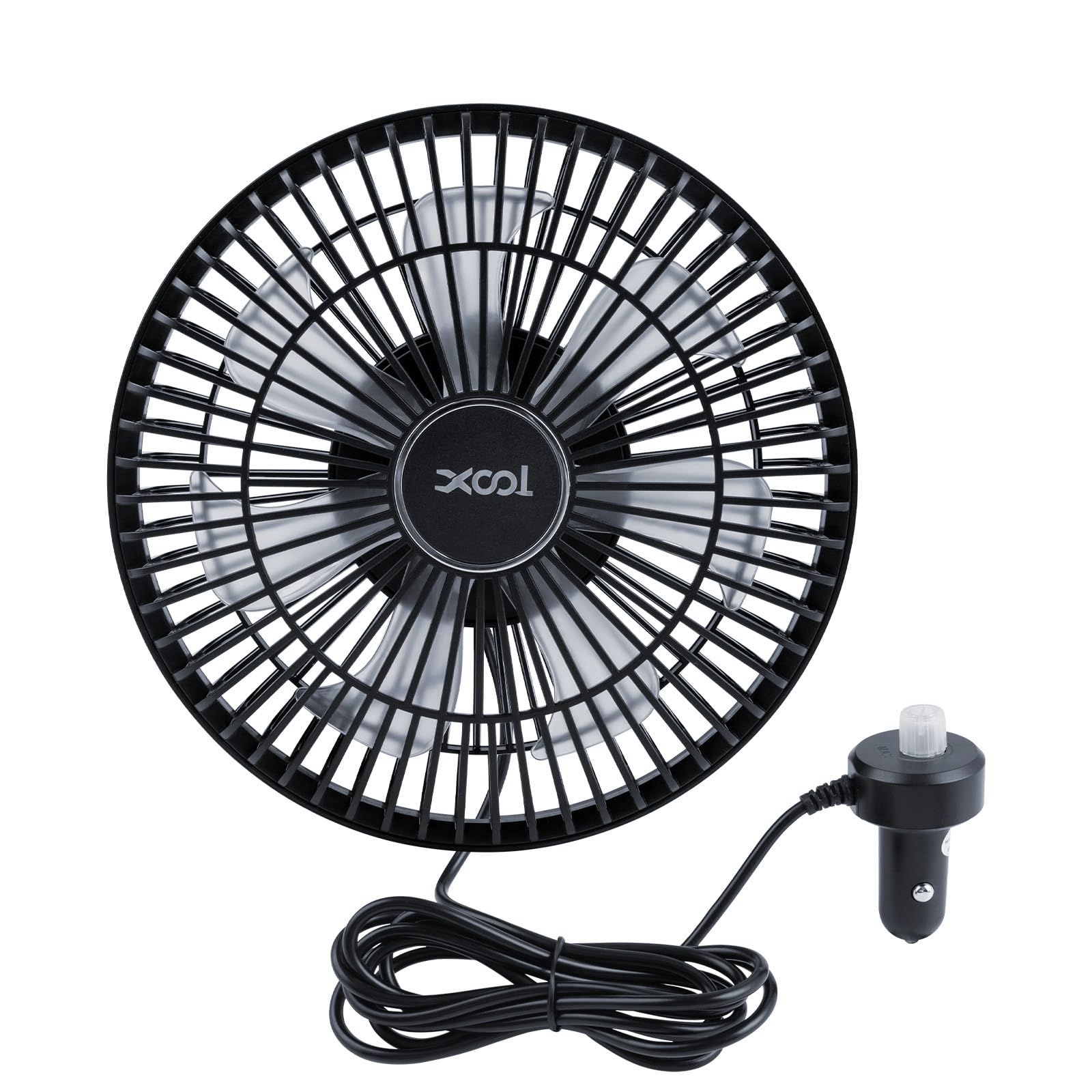
The job: the air-out, without idling. Clipped in a doorway or window, a small 12V fan moves serious air through the cab during the ventilation steps — and keeps air moving on parked days afterward so the cab never goes stale again.
Why it fits here
- Powers the air-out: step 6 of the protocol works far better with forced airflow than with still air.
- Sips power: runs for hours off a 12V outlet without worrying the batteries.
Watch out for
- It moves air; it does not clean. Run the protocol first — a fan over a dirty cab just circulates the funk faster.
SURDOCA Backseat Cab Organizer
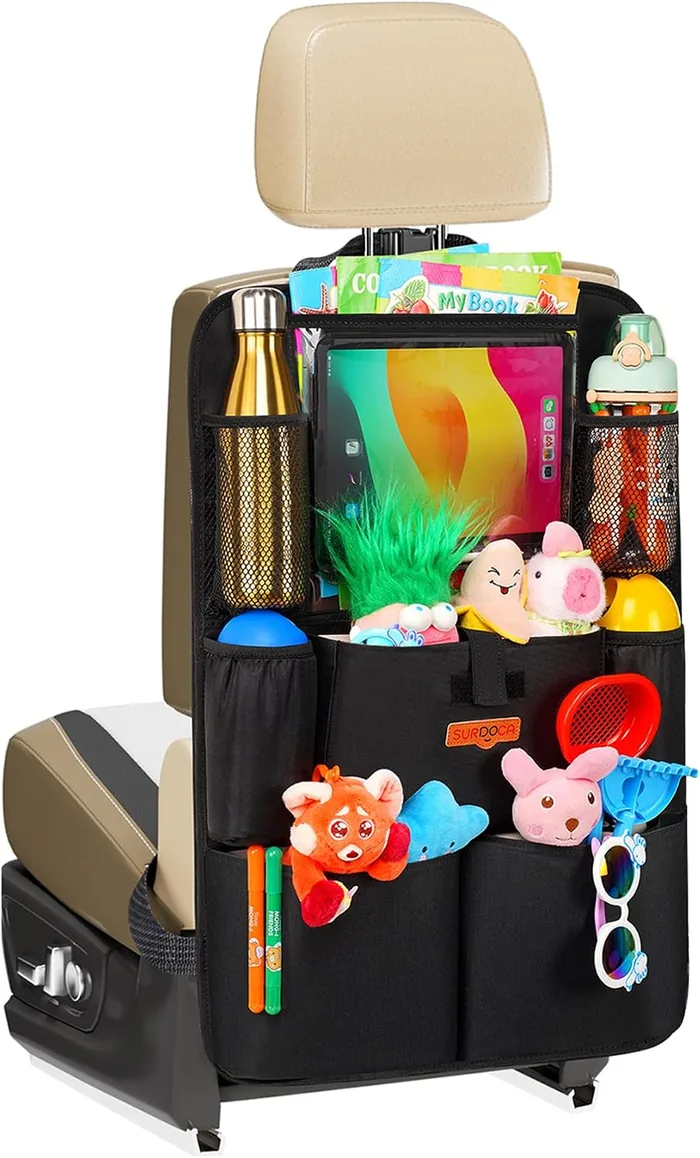
The job: containment. Shoes, laundry, trash, cleaning supplies — the smell sources all get their own pockets instead of loose piles under the bunk. Prevention gear, not rescue gear.
Why it fits here
- Sources stay contained: dirty laundry and shoes in pockets beat a heap on the bunk.
- Makes the routine easy: a visible trash pocket is the difference between trash-out at every stop and trash archaeology monthly.
Watch out for
- It organizes; you still empty it. An organizer full of old trash is just tidy trash.
Questions
FAQ
How long does it take to get smoke smell out of a truck?
Expect a full day of work plus several days of airing for a heavily smoked-in cab — fabrics hold smoke deep. The filter change is the highest-leverage single step; the wash-everything pass is the rest. Light smoke in a well-kept cab can clear in an afternoon.
Does baking soda actually work?
Mildly and honestly: sprinkled on carpet and upholstery, left an hour, then vacuumed, it absorbs surface odour. It will not rescue a smoke-saturated mattress or a mouldy HVAC — those need the real steps above.
My A/C smells sour when it first starts. What is that?
Almost always mildew on the evaporator or a clogged A/C drain — the classic "dirty sock" smell. The vent treatment in the protocol plus a fresh cabin filter usually clears it. If it persists, the drain may need a shop to clear.
Should I just buy an ozone generator?
Most drivers should not. They work only on an empty cab, need thorough airing afterward, and repeated use is hard on rubber seals and electronics. Do the manual protocol first — it solves the cases ozone is usually bought for.
How this guide was made
Research-based. We did not test these hands-on.
This is an advice-first guide, not a product roundup: the protocol comes from recurring driver-forum threads on cab deodorizing (multiple long-running TruckersReport discussions on smoke smell, mildew, and slip-seat cleanups, plus an Overdrive piece on keeping an assigned truck fresh), sequenced the way experienced drivers actually do it. The two products in the gear section were not scored — they are named only for the specific support jobs they do. Affiliate links are marked and fund the site; see the affiliate disclosure.
Keep reading