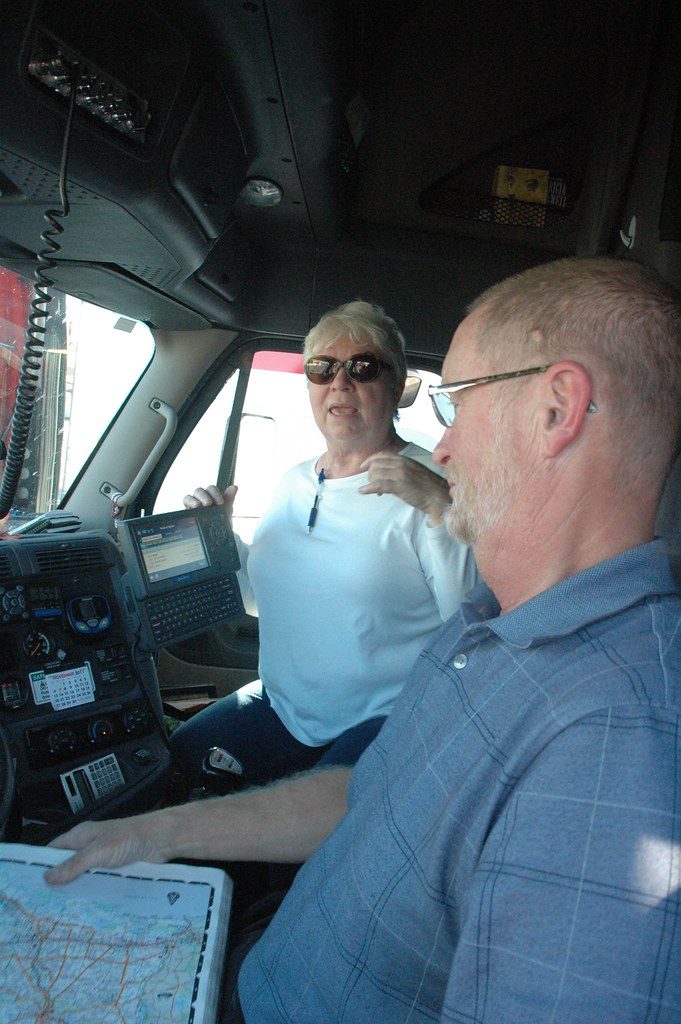
Team driving
Why you can't sleep in a moving truck (and what actually helps)
Updated September 2026
Short answer: it is a skill, not a purchase. Sleeping in a moving truck is hard because of road drone, vibration, daylight, and a body clock that has no idea what shift it is on. The fixes that work are mostly free — bunk choice, shift design, caffeine timing, and noise control. Gear helps at the margins, and only after the free stuff is handled.
Research-based. We did not test these hands-on. Scores come from published specs and driver reviews. No scores were assigned here — the advice is the point, and the gear section at the end is short on purpose.

Key takeaways
- Sleep on the lower bunk while the truck is rolling. Less motion, no fall risk, and experienced team drivers are unanimous on this.
- Your shift design matters more than your mattress. A consistent sleep window beats any topper — flipping between day and night sleep destroys rest quality.
- Cut caffeine 4–6 hours before your bunk time. The coffee that gets you through hour 9 of your shift is the same coffee keeping you awake in the bunk.
- Noise and light are solvable and cheap. Foam earplugs, white noise, and a dark, cold bunk fix most of the "I can't fall asleep" half of the problem.
- Secure everything loose before you lie down. At a hard brake, your water bottle, laptop, and lunchbox become projectiles.
The problem
Why it is so hard
Four things fight you at once. Road drone — the constant low-frequency hum that your brain refuses to file as background. Vibration — factory bunk pads transmit every expansion joint straight through a thin spring pad. Light — if your sleep window falls in daylight, the sleeper curtains are fighting the sun. And timing — team schedules often flip your body clock every few days, which is the fastest known way to ruin sleep quality.
Then there is the anxiety half: lying there braced for the next bump, rehearsing the accident you are not driving through. Drivers who team for years describe the same learning curve — the first weeks are rough, and the fix is a routine, not a product.
Safety first
The bottom-bunk rule
This one is non-negotiable and costs nothing: the off-duty driver sleeps on the lower bunk while the truck is moving. Motion is amplified up top, there is a real fall risk in a sudden manoeuvre, and most top bunks lack proper restraints. Save the top bunk for parked nights.
Second, secure the sleeper before every shift swap. Stow the laptop, wedge the cooler, cap the water bottle, latch the cabinets. Anything loose in the bunk area becomes a projectile at a hard brake — and you are the thing it lands on. Five minutes of tidying is the cheapest safety upgrade in team driving.
The biggest lever
Fix your shift first
No topper compensates for a chaotic schedule. The teams that sleep well protect a consistent sleep window — same hours every day, even on reset days. If you run 12/12, keep the 12. If you run 10/10, keep the 10. The drivers who suffer most are the ones flipping between day sleep and night sleep across the week.
Talk with your co-driver about driving style, too. Smooth lane changes, gentle braking, and a heads-up before rough construction zones are free and make more difference than any gadget. Some teams agree that the night driver takes the smoother interstate stretches. It sounds small; in the bunk, it is everything.
And start your wind-down before the swap. An hour of TV, a shower at the truck stop, changing into sleep clothes — the same cues that work at home work in the bunk, because your brain is not checking GPS.
Timing
Caffeine and food timing
Caffeine has a half-life of roughly 5–6 hours, which means the coffee at hour 8 of your driving shift is still half-strength when you climb into the bunk. Cut caffeine 4–6 hours before your sleep window. If you drive nights and sleep days, that means your last coffee lands mid-shift, not at the end of it.
Eat your real meal before the wind-down, not in the bunk. A heavy meal right before sleep makes the vibration and sway noticeably worse for digestion. Hydrate through the shift, then taper fluids in the last hour so you are not waking up for the truck-stop bathroom at 3 a.m.
The cheap fixes
Kill noise and light
Most of the "I can't fall asleep" half is sensory, and the fixes are nearly free. Foam earplugs are the forum's number-one recommendation for a reason — a few cents a pair, and they take the edge off the drone. Replace them often; a grimy earplug is an ear infection waiting to happen.
White noise fills the gaps earplugs leave — the rumble changes pitch with speed and load, and steady noise masks the changes. A phone app works, but a phone buzzing with notifications next to your pillow defeats the purpose: airplane mode, or a dedicated cheap device.
Dark and cold. If your sleep window includes daylight, the sleeper curtains have to actually seal — check for light leaks around the edges and fix them with the curtains you already have. Keep the bunk cool; drivers consistently report sleeping better with the sleeper a few degrees cooler than the cab, the same as a bedroom at home.
Honesty
When it just does not work
Here is the part the gear blogs skip: some people genuinely cannot sleep in a moving truck. Motion sickness, light sleeping, anxiety that never fades — if you have given it a real month with the routine above and you are still getting fragments, team driving may not be your setup. That is not failure; it is information. A tired driver is a dangerous driver, and no pay-per-mile premium is worth chronic sleep deprivation.
If you are training with a company trainer, say so early. Trainers have seen every version of this, and most would rather adjust the plan than have a zombie in the right seat.
The footnote
If you need gear
Everything above is free. If you have done it all and want the margins, these are the three buys the forums keep coming back to — each does one specific job.
Linenspa 2″ Gel Memory Foam Mattress Topper — Twin XL

The job: decouple you from the road. Factory bunk pads transmit vibration; two inches of foam absorbs it. Gel-infused so it sleeps cooler than plain foam in a warm cab.
Why it fits here
- Thin enough to keep headroom: 2 inches softens without turning the lower bunk into a crawl space.
- Cheap for what it fixes: usually about $45–$65 CAD — less than one fill-up.
Watch out for
- It will migrate. On a moving bunk, sandwich it under a deep fitted sheet pulled over pad and topper together — the forum fix that actually holds.
MUSICOZY Bluetooth Sleep Headphones with Mask

The job: white noise plus darkness in one piece. A soft headband with flat speakers — no earbuds digging into your ear when you roll over — and it doubles as a sleep mask for daylight swaps.
Why it fits here
- Two problems, one item: steady white noise for the drone, blackout for the daylight.
- Nothing in your ears: side-sleepers tolerate a headband far better than earbuds all night.
Watch out for
- Charge it on your driving shift. A dead headband at bunk time is just a headband.
Cirorld memory foam neck pillow kit
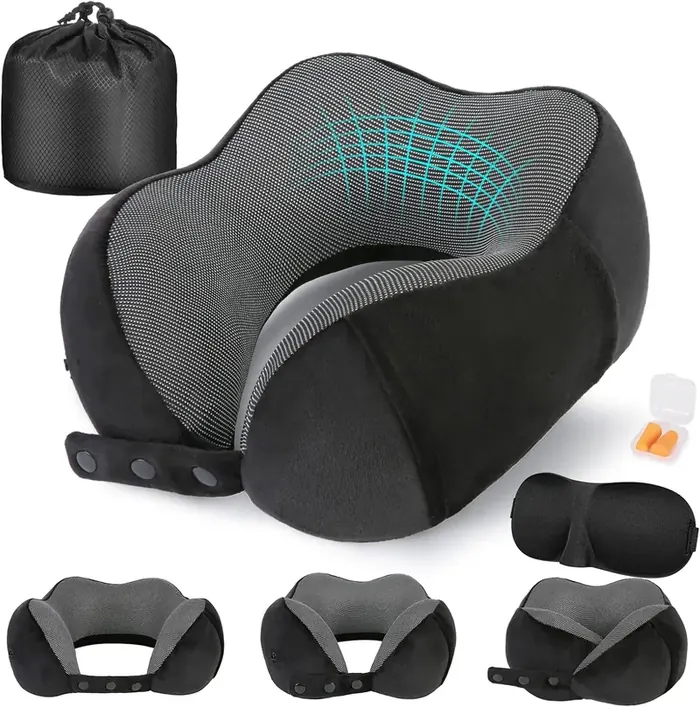
The job: keep your head from rolling with every sway. The forums' favourite brace is a body pillow wedged alongside you; this is the compact version for when space is tight or you are catching rest in the passenger seat at a dock.
Why it fits here
- Stabilises your head: less micro-waking every time the truck sways in a lane change.
- Packs small: compresses down when it is your turn to drive.
Watch out for
- Not a substitute for the bunk. This is for resting upright — real sleep happens lying down, lower bunk.
Questions
FAQ
Is it legal to sleep in the bunk while the truck is moving?
Team operations are built around exactly this — the off-duty driver rests in the sleeper berth while the co-driver drives. Carriers expect it, and experienced drivers and trainers consistently say the same thing about safety: lower bunk, secured cab, before the wheels roll.
Will earplugs block sounds I need to hear, like the air horn?
Foam earplugs take the edge off steady drone; they do not make you deaf. You will still hear a horn, a tyre blowout, or your co-driver calling your name — just quieter. That is the point.
How long does it take to adjust?
Drivers report anywhere from a few days to a few weeks. A consistent sleep window and the wind-down routine above shorten it. If it has been a full month of genuine effort and you are still sleeping in fragments, re-read the "when it just does not work" section — that answer is honest, not failure.
What about motion sickness in the bunk?
It is real and common at first. Reading or looking at a phone in a moving bunk makes it worse — eyes and inner ear disagree. Lie back, close your eyes, and face forward if the bunk layout allows it. Most drivers find it fades within a week or two; if it does not, that is useful information about team driving as a career fit.
How this guide was made
Research-based. We did not test these hands-on.
This is an advice-first guide, not a product roundup: the recommendations come from multi-year driver-forum threads on team-driving sleep (notably long-running TruckersReport discussions where experienced team drivers share what actually worked), plus standard sleep-hygiene guidance applied to the sleeper-berth context. The three products in the gear section were not scored — they are named only because the forums keep returning to them for specific jobs. Affiliate links are marked and fund the site; see the affiliate disclosure.
Keep reading