Winter cab
Why your windshield fogs up overnight (and how to stop it)
Updated September 2026
Short answer: the moisture came from you. A night of breathing in a sealed sleeper puts real water into the cab air, and cold glass turns it into fog — or interior frost when it is cold enough. The fix is moisture management, not a product. That said, two cheap aids: a generic 12V clip-on fan to keep cab air moving (about C$40, price checked September 2026; the listing shows the current price), and the Tevlaphee windshield cover to keep frost off the glass overnight (about C$30, price checked September 2026; the listing shows the current price). October is peak condensation season — warm days, freezing nights, sealed-up sleepers.
Research-based. We did not test these hands-on. Scores come from published specs and driver reviews. No scores were assigned here — the advice is the point, and the gear section at the end is short on purpose.

Key takeaways
- You are the humidifier. Breathing all night in a sealed cab loads the air with moisture; the windshield is just where it shows up.
- Crack a window or vent a finger's width overnight. The forums' most-repeated fix — a little air exchange beats every gadget.
- Clear it with defrost plus A/C, on fresh air. The A/C dehumidifies even in winter; recirculation mode traps the moisture in.
- Get wet things out of the cab before bed. Wet boots, soaked gloves, and laundry drying in the sleeper are moisture bombs.
- Pooled water or drips are not condensation. That is a leak — door seals, marker lights, or the windshield seal — and it needs a shop, not a tip.
The physics
Where the water comes from
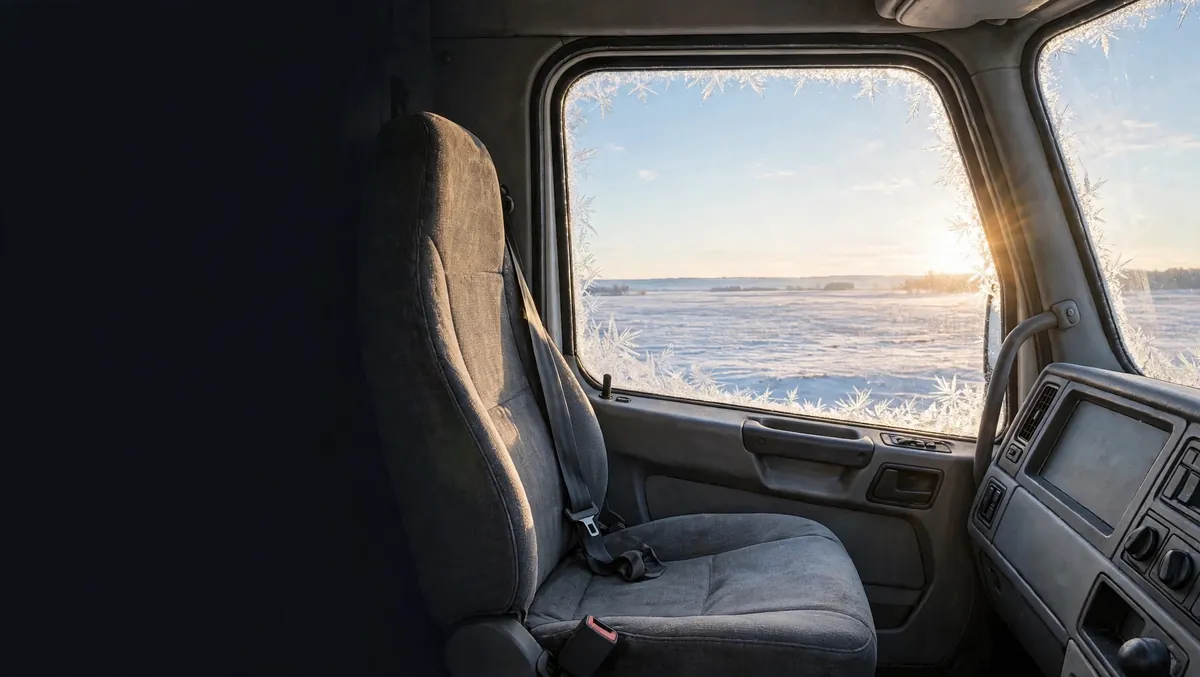
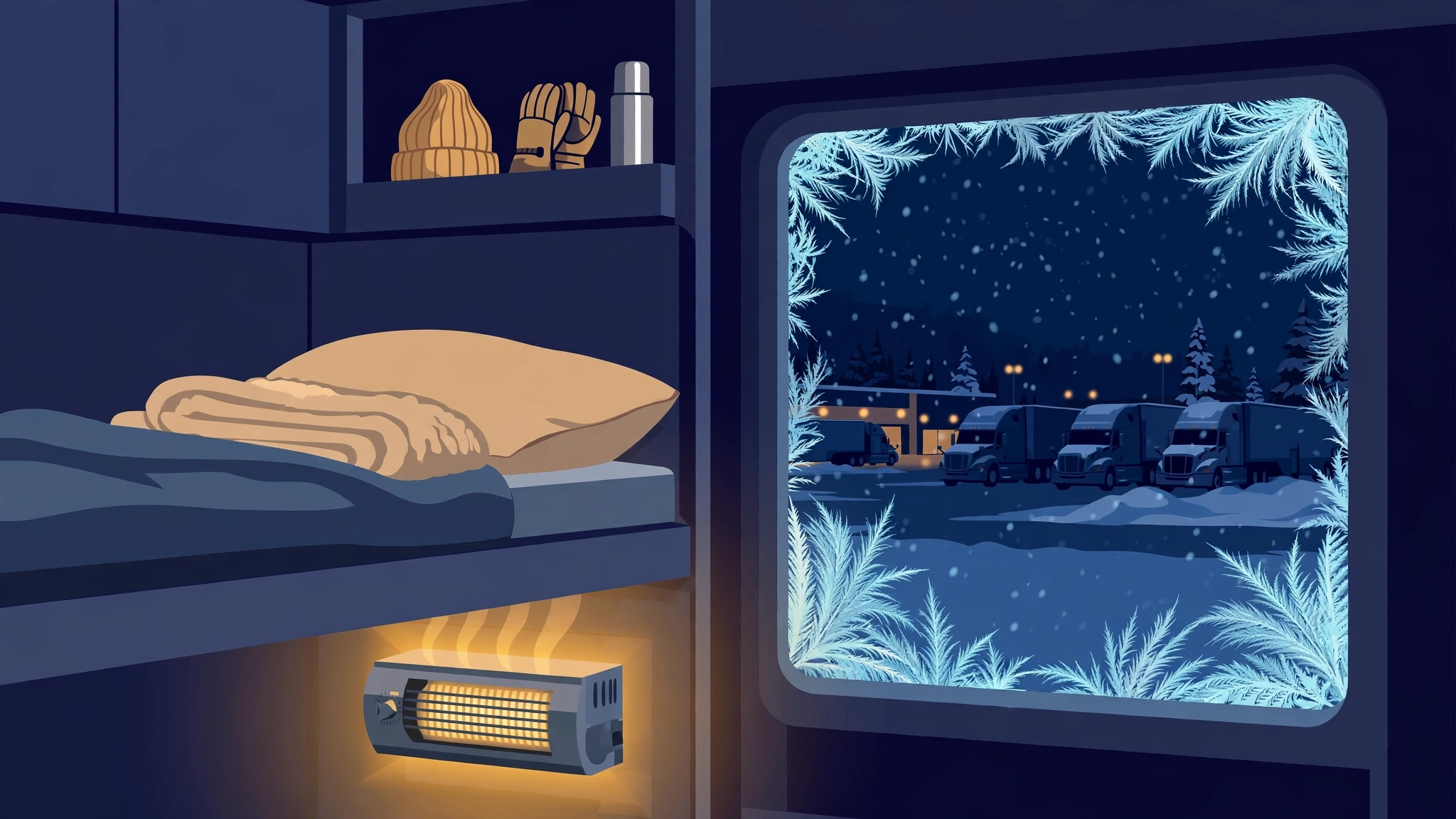
Warm air holds more moisture than cold air. You spend eight hours exhaling warm, humid breath into a small sealed box; meanwhile the windshield sits at roughly outside temperature. When that humid air touches the cold glass, it cools past the dew point and the water has to go somewhere — so it beads up on the glass. Near or below freezing, those beads turn into the feathery interior frost every winter driver knows.
Breath is the main source, but it has helpers: wet boots and gloves by the door, a damp jacket on the hook, snow melting off your pants, even a wet floor mat. A cab that was fine in October starts fogging in December because the glass got colder, not because anything broke.
Mornings
The morning routine that works
Do not just wipe it — wiping smears it and it comes back in minutes. Start the truck, set the HVAC to defrost, heat plus A/C together, fresh-air mode (not recirculation). The air conditioner is a dehumidifier: it wrings moisture out of the air even in winter, and the heat keeps you comfortable while it works. Give it several minutes before you roll.
Two things drivers get wrong: recirculation mode re-circulates the same humid air and makes fogging worse — it is for summer cooling, not winter mornings. And driving with a wiped peephole is not a plan; wait until the glass is actually clear. The five minutes of idle is cheaper than the alternative.
Prevention
Stop it before you sleep
The best morning is the one where there is nothing to clear. Three habits, all free:
Vent a finger's width. Crack a window or roof vent just enough for air exchange. Yes, you lose a little heat — a bunk heater or warm bag covers it, and the forums are near-unanimous that this single habit does more than any product. Window vent screens make it work without the security worry.
De-wet the cab before bed. Boots go in the side box or on a mat by the door, not under the bunk vent. Hang the wet jacket where it can drip outside the living space. If you have been drying laundry in the sleeper — stop; a load of laundry is a fog machine.
Kill recirculation before shutdown. If you have been running recirc all day, the cab air is already loaded. Switch to fresh air for the last stretch so you park with drier air inside.
What helps, honestly
Airflow beats chemicals
Moving air evens out the temperature across the glass and carries moisture to the vent you cracked — which is why a small cab fan aimed generally at the windshield area helps more than most people expect. Desiccant bags (silica gel pouches sold for closets and cars) absorb some moisture overnight and are cheap; treat them as a helper, not a solution, and recharge them per the package directions.
Anti-fog sprays and wipes? They work for a while — a few days to a couple of weeks — then need reapplying, and on interior frost they do nothing at all. Fine as a supplement, not a strategy.
Diagnostics
When it is not condensation
Condensation is a film or frost on the glass. Pooled water, drips from the overhead, or a wet headliner is a leak, and no amount of venting fixes a leak. The usual suspects on a tractor: door and window seals, cab marker lights, the windshield seal itself, and the sleeper-to-cab boot. If only one spot is always wet, look directly above it. Get it to a shop — water inside the cab rots headliners, breeds mildew in the HVAC, and finds the electronics eventually.
The footnote
If you need gear
The honest hierarchy is vent, dry, defrost — all free. Two buys earn their place at the margins:
Generic 12V clip-on fan
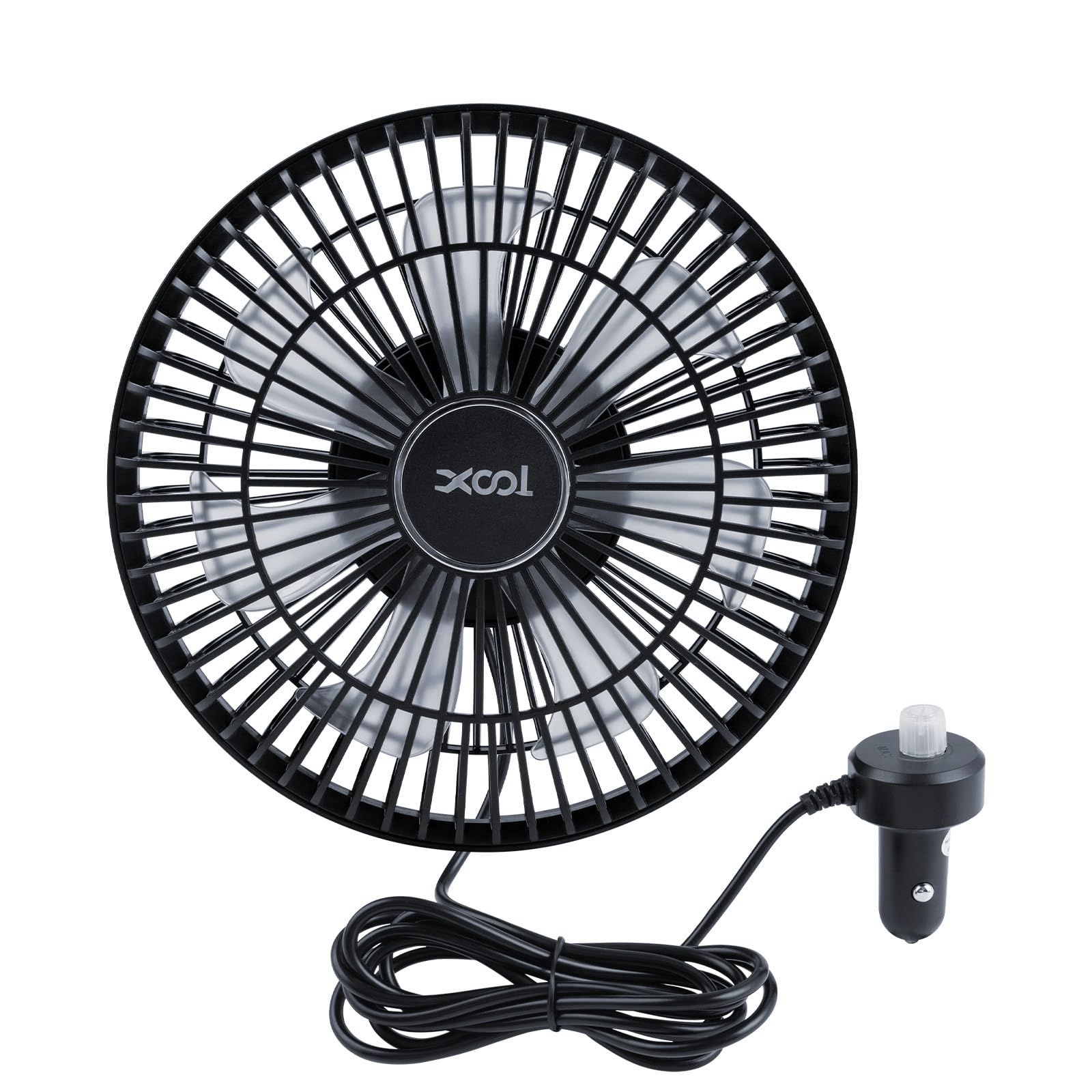
The job: keep cab air moving overnight so moisture does not settle on the coldest glass. Clips to a vent or handle, sips power from a 12V outlet, and doubles as a summer bunk fan.
Why it fits here
- Airflow is the mechanism: moving air is what the defrost routine does — this does a little of it all night.
- Near-zero power draw: a small 12V fan will not meaningfully touch your batteries overnight.
Watch out for
- It is a helper, not a fix. With the windows sealed and wet boots inside, a fan just circulates the problem.
Tevlaphee Windshield Cover
The job: the outside half of the winter-morning problem. An exterior cover keeps snow and exterior frost off the glass, so your morning routine only has to deal with the inside. It does nothing for interior condensation — that is what the vent crack is for.
Why it fits here
- Halves the morning job: no scraping the outside while the defroster handles the inside.
- Cheap winter insurance: magnetic/strap covers go on in under a minute at shutdown.
Watch out for
- Not a condensation fix. Buying this expecting dry interior glass will disappoint — pair it with ventilation.
Questions
FAQ
Won't cracking a window overnight freeze me out?
A finger's width, not the whole window — you are exchanging air, not air-conditioning the parking lot. With a warm sleeping bag or bunk heater, drivers consistently say they do not notice the difference except in the glass. If it is truly brutal cold, crack the downwind vent instead of a window.
Does the A/C really help in winter?
Yes — the air conditioner dehumidifies regardless of season. Run it together with heat on defrost: the A/C wrings out moisture while the heat keeps the cab comfortable. This is also why defrost mode engages the A/C compressor automatically on most trucks.
Why is it always the windshield, not the side windows?
It is the largest single pane of cold glass and it faces the night sky, which radiates heat away and makes it the coldest surface in the cab. Side windows fog too — the windshield just gets there first.
Can interior frost damage anything?
Occasional frost is harmless — it melts and you wipe it. Chronic moisture is the problem: it feeds mildew in the HVAC and headliner, fogs up electronics over time, and keeps the cab smelling damp. The prevention habits above are really about the moisture, not just the morning view.
How this guide was made
Research-based. We did not test these hands-on.
This is an advice-first guide, not a product roundup: the diagnosis comes from recurring driver-forum threads on sleeper-cab humidity and fogged glass (multiple long-running TruckersReport discussions, including drivers comparing notes on venting, A/C use, and leak-vs-condensation diagnosis), plus standard HVAC and dew-point physics. The two products in the gear section were not scored — they are named only for the specific marginal jobs they do. Affiliate links are marked and fund the site; see the affiliate disclosure.
Keep reading