Seat comfort
Wedge cushions and hip alignment: do they actually help?
Updated September 2026
Short answer: the idea is sound, the proof is thin, and you can test the whole concept with a rolled towel before spending a dollar. A wedge tilts your pelvis forward a few degrees and opens the hip angle — which should mean less slouching on long sits. Whether it fixes your ache depends on your seat, your body, and what is actually causing the ache.
Research-based, not hands-on tested. No scores were assigned here — this is an advice guide, not a product roundup. No products are named and there is nothing to buy on this page.

Key takeaways
- A wedge cushion is a foam ramp — thick at the back, thin at the front — that tilts your pelvis forward and opens the hip angle a few degrees.
- The ergonomic logic is plausible, the product evidence is thin. Less backward pelvic tilt should mean less rounding of the lower back — but direct evidence for wedge cushions, in truck seats, is sparse. No honest guide can call them proven.
- Run the towel test first. A folded towel under your sit bones for a week tells you more than any product page, and it costs nothing.
- Seat setup still dominates. Seat height, backrest angle, and lumbar position matter more than any add-on cushion.
- Diagnosed back condition, sciatica, or recent surgery? Talk to a clinician before changing how you sit. This guide is not medical advice.
The mechanism
What a wedge cushion actually is
A wedge cushion is a slab of firm foam cut as a ramp: a few inches thick at the back edge, tapering to under an inch at the front. It sits on the seat pan, and you sit on it — sit bones on the thick part, thighs sloping down toward the knees.
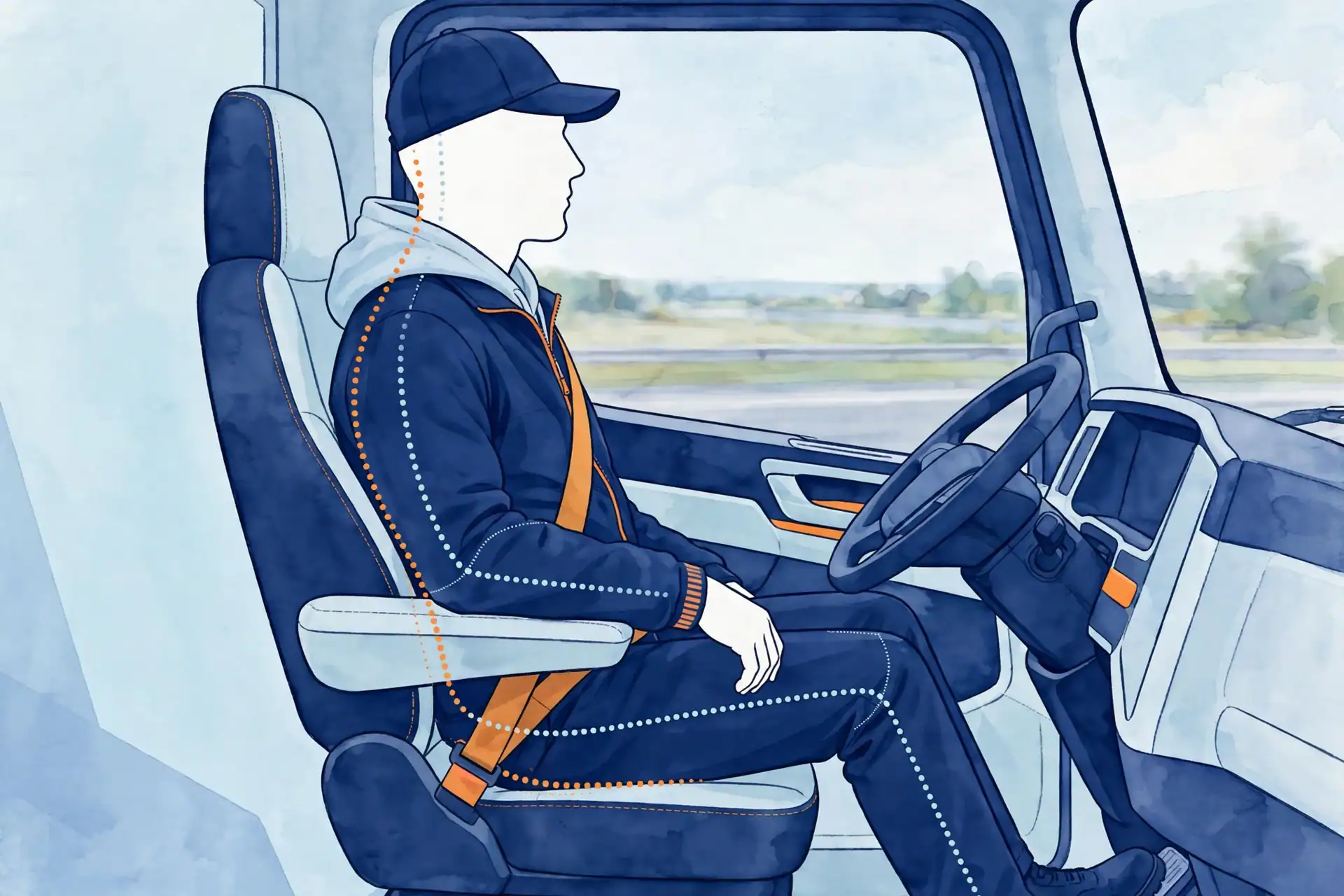
What it changes is pelvic angle. Sitting at 90 degrees — or worse, with knees riding higher than hips on a flat or rearward-sloping seat pan — the pelvis tends to roll backward. The lumbar curve flattens, the shoulders follow, and by hour six you are doing the long-haul hunch. A wedge rotates the pelvis forward a few degrees instead, which opens the hip angle and makes it mechanically harder to collapse into that slouch.
That is the entire pitch. It is not magic foam; it is geometry. Whether the geometry helps you depends on what your pelvis is doing now — which is why the towel test below comes before any buying advice.
The pitch
What wedge cushions claim
Sellers make four claims, roughly in this order: better posture, less lower-back ache on long sits, less slouching as the day wears on, and better leg circulation from reduced pressure under the thighs. Some add "improved focus" and "more energy," which is where a careful reader should start raising an eyebrow.
Notice what these claims have in common: they are all things a forward-tilted pelvis could plausibly deliver. Plausible is not proven. The claims come from the people selling the wedges, not from laboratories — and "clinically proven" on a product page, without a citation you can check, is marketing language, not evidence.
Honesty
What the evidence actually says
Here is the fair summary, including the parts that do not help sell wedges.
The general principle is well supported. Decades of ergonomics research — mostly from the office-chair world — agree that open hip angles and a preserved lumbar curve reduce static-load discomfort over long sits. Nobody serious disputes the geometry.
Wedge-cushion-specific evidence is thin. The studies that exist are few, small, and short — and driver-specific data, in real truck seats, over real 10-hour days, is thinner still. If someone tells you wedges are "proven" for truck drivers, ask what they are citing. You will usually get silence.
Comfort is individual and noisy. Body proportions, seat geometry, and existing conditions swamp the effect of any single add-on. A wedge that transforms one driver's day does nothing for the next — which is exactly what you would expect from a geometry fix applied to different bodies.
No wedge fixes a medical problem or a bad setup. A herniated disc does not care about your foam ramp. Neither does a seat set two inches too low with the backrest bolt upright.
Bottom line: plausible mechanism, unproven product. That sentence is the whole reason this guide exists — and the whole reason the towel test below comes before any mention of buying.
Fit check
Who might benefit
You are the most likely candidate if several of these sound familiar:
- You catch yourself slouching by hour six, no matter how the day started.
- Your seat pan is flat or slopes slightly backward, knees at or above hip height.
- You feel better perched on the front edge of the seat. That perching instinct is your body asking for forward tilt — a wedge just makes it sustainable.
- Your lower back feels flattened and achy after long sits, rather than sharp or shooting.
If that is you, the towel test is worth a week. If none of it sounds familiar, a wedge is probably not your problem — read the posture guide instead and check the bigger levers first.
Caution
Who should skip it
Forward pelvic tilt changes how load moves through the spine. For most healthy backs that is a neutral-to-positive trade; for some conditions it is not. Skip the wedge — or at least get a clinician's opinion first — if you have a diagnosed disc problem, sciatica or radiating leg pain, spinal stenosis, or recent back surgery. The same goes during pregnancy.
Also skip it if your air-ride seat already has tilt adjustment you have not tried. Many do, and the built-in adjustment beats any foam ramp — it is shaped for the seat, it cannot slide, and you already paid for it. This is worth repeating: this guide is not medical advice. Persistent or sharp pain deserves a physiotherapist, not a purchase.
The free experiment
The towel test
This is the forums' favourite zero-dollar experiment, and it is the honest core of this guide. Fold a bath towel into a rough wedge — about two inches thick at the back, tapering toward the front — and put your sit bones on the thick part. Drive your normal week.
Pay attention to four things: Do you slouch less? Is the end-of-day ache duller? Do you slide forward? (Some forward drift is normal at first; constant fighting means too much slope.) Do your thighs complain? (Pressure shifting forward can trade back ache for thigh ache — that is useful information, not failure.)
A week of yeses means a real wedge is probably worth the small money. A week of no-change means the wedge was never your answer, and you just saved the price of finding out the expensive way. Either way, the towel cost you nothing — which is more than can be said for most comfort experiments.
If you insist
If you buy one anyway
No brands are named here — the towel test matters more than the shopping. But if the test says yes and you go looking, buy on these traits, not on marketing copy:
- Firm, high-density foam. Soft foam compresses into a flat cushion within weeks and you are back where you started, minus the money.
- A modest slope. If you feel yourself sliding toward the wheel, it is too steep. You want tilt, not a slide.
- A washable cover and a non-slip base. Cab life is dusty life, and anything that migrates under braking is a hazard, not a comfort aid.
- The right width for your seat pan. A wedge narrower than your hips concentrates pressure; wider than the pan overhangs and rocks.
- A return policy. The only honest trial is in your truck, on your routes. If you cannot send it back, you have not bought a test — you have bought a commitment.
And secure it. Anything loose in the cab becomes a projectile at a hard brake — a foam wedge included. If it can shift, it is not installed.
The bigger levers
The setup that matters more
A wedge is a finishing touch. These are the foundation, and they are free:
- Seat height: thighs roughly level, feet flat on the floor — not dangling, not knees-up.
- Backrest angle: around 100–110 degrees, not bolt upright. Upright feels virtuous and fatigues faster.
- Lumbar support at belt line, not mid-back. This is the single biggest lever for most drivers — see the seat comfort guide for the full setup.
- Wheel close enough that your shoulders stay back against the seat. Reaching forward all day undoes everything the wedge is trying to do.
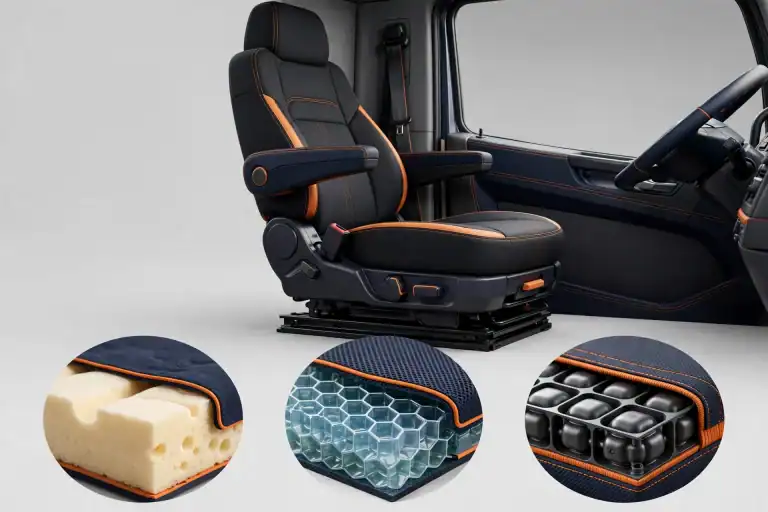
Work through the posture guide once per truck — ten minutes, no purchases — and then decide whether you still want the wedge. For cushion materials generally, memory foam vs gel covers what each type actually does. And if you are shopping the category properly, the seat cushion rankings score the full field.
Questions
FAQ
Will a wedge cushion fix my lower back pain?
If the pain comes from slouching through long sits, it might help — that is the mechanism this whole guide is about. If it comes from a disc, joint, or nerve issue, no cushion fixes that. Achy-and-dull leans posture; sharp, shooting, or radiating leans clinician. When in doubt, the clinician wins.
Can I use a wedge on an air-ride seat?
Yes — but check the seat's own tilt adjustment first. Many air-ride seats already offer forward tilt, shaped for the pan and impossible to dislodge. If you do add a wedge, make sure it cannot slide: non-slip base, correct width, and nothing that shifts under braking.
Wedge or lumbar roll — which first?
Different jobs. A lumbar roll supports the lower-back curve; a wedge tilts the pelvis that the curve sits on. If you have neither, start with lumbar support at belt line — it is the bigger lever for most drivers — then run the towel test for the wedge.
Do wedge cushions improve circulation?
That is the claim: less pressure under the thighs as the seat front drops away. The mechanism is plausible and the direct evidence is thin — the same story as the rest of this guide. Regular stops, moving your legs, and not sitting on a wallet matter more than any cushion.
How this guide was made
Research-based, not hands-on tested.
This is an advice guide, not a product roundup: no products are named, no scores were assigned, and no affiliate links appear on this page. The mechanism descriptions reflect standard ergonomics principles for seated posture; the evidence limits are stated wherever they bite. Where sellers make clinical claims without checkable citations, we say so instead of repeating them. This guide is not medical advice — persistent pain deserves a clinician.
Keep reading