
Seat comfort
3 signs your seat cushion is failing you
Updated October 2026
Short answer: cushions die slowly, then all at once. Foam breaks down from heat, weight, and 11-hour days long before the cover looks worn. These are the three tells drivers notice first — and the 30-second test that settles it.
Research-based. We did not test these hands-on. Scores come from published specs and driver reviews. No scores were assigned here — the diagnostic is the point, and the gear section at the end is short on purpose.
Key takeaways
- Foam fails from the inside out. The cover can look fine while the core has lost its rebound — judge the foam, not the fabric.
- New pain is data. Tailbone, hip, or lower-back ache that wasn't there last season and builds through the driving day points at the cushion before it points at you.
- Constant fidgeting is a symptom. If you're reshuffling every hour, the cushion has stopped doing its job.
- The press test takes 30 seconds and tells you more than the price tag ever did.
Sign 1
Sign 1: it doesn't spring back
Press your palm hard into the middle of the cushion and lift it away. Good foam rebounds in a second or two. Dead foam keeps your handprint — or rebounds slowly and unevenly, thinner in the middle where you sit than at the edges.
This is compression set, and heat accelerates it. A cab parked in summer sun bakes the foam from below through the seat base; winter doesn't reverse the damage. Once the core has taken a permanent dent, no cover, strap, or rotation trick restores the support — the material itself is done.
Sign 2
Sign 2: new pain that wasn't there last season
The pattern drivers describe is specific: fine for the first few hours, then a deep ache in the tailbone, one hip, or the lower back that builds through the day and eases overnight — only to return tomorrow. When the onset is new and the truck, route, and hours haven't changed, the cushion is the variable that changed.
Be honest about the timeline, though. Pain that shows up in the first hour, radiates down a leg, or doesn't ease with rest deserves a professional, not a shopping page. A cushion fixes support problems; it doesn't diagnose medical ones.
Sign 3
Sign 3: you're always readjusting
Sliding forward off the cushion, hoisting yourself back up, re-centring it after every fuel stop — that's the support failing, not your posture failing. A working cushion holds your sitting bones in place; a dead one lets your pelvis roll, and your body spends the day compensating.
Check the straps and the non-slip base too. Stretched elastic and a worn grippy bottom let the whole cushion migrate across the seat, which reads as the same fidgeting. If the base is the problem and the foam still passes the press test, a cheap non-slip pad under it buys time — but treat it as a patch, not a cure.
The test
The 30-second press test
Pull the cushion off the seat and do this before you spend anything:
- Palm press the centre for five seconds, then release. It should rebound fully within a couple of seconds.
- Fold it in half and let go. It should open back up on its own, not stay creased.
- Compare centre to edge. Press the middle, then press near the edge. If the middle feels noticeably thinner or softer, that's your sitting dent — permanent.
Fail any one of these and the cushion is done. Pass all three and your problem is probably the seat itself, the seating position, or the hours — see our seat comfort guide and cab posture fixes before buying anything.
The footnote
If you need gear
If the press test failed, these are the two cushions our seat cushion guide keeps coming back to — picked from published specs and driver reviews, in the $40–50 CAD range as of September 2026.
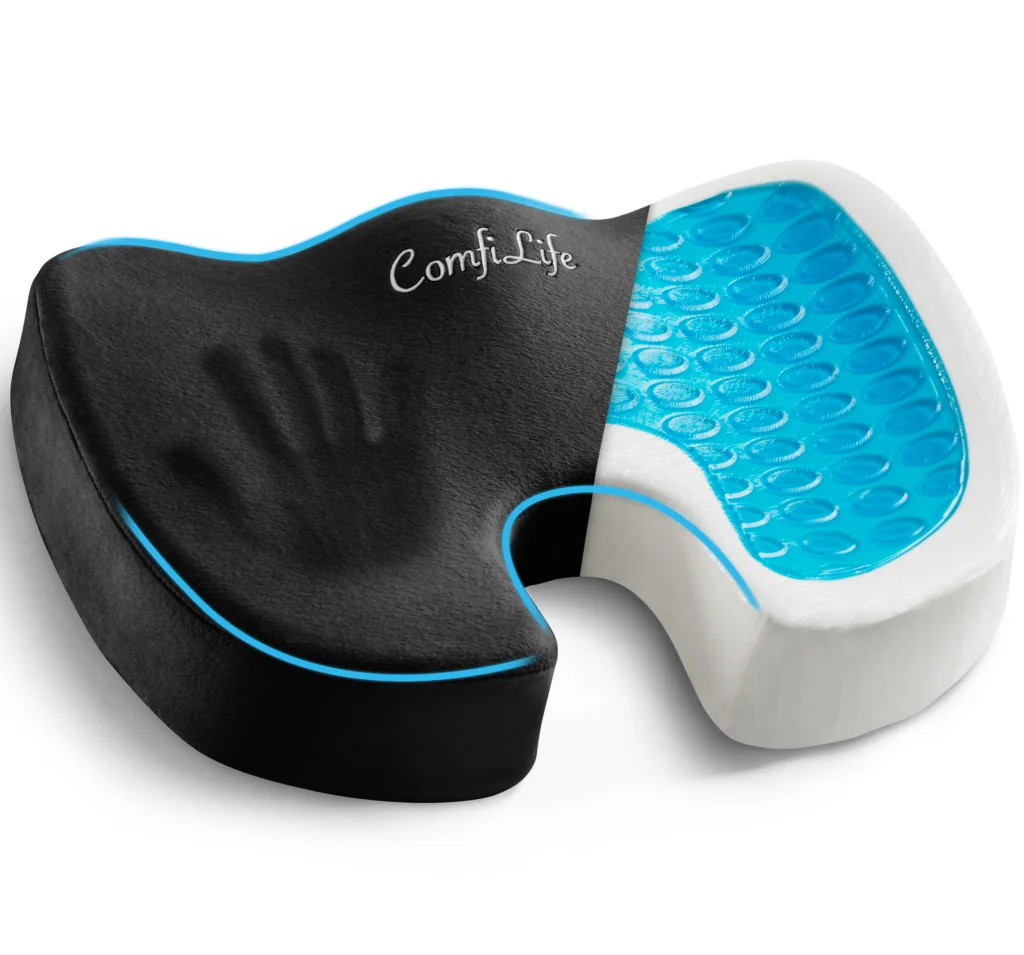
ComfiLife gel-enhanced seat cushion
The job: cooling plus support. Gel layer over memory foam, the largest review base of the cushions we track, and a non-slip base that actually grips.
Everlasting Comfort seat cushion
The job: the budget pick that covers the basics. Plain memory foam, no gel, but the shape and straps do the job for drivers who run hot-weather routes less often.
Questions
FAQ
How long should a truck seat cushion last?
There is no honest universal number — it depends on hours seated, body weight, and cab heat. Judge by the press test above, not the calendar. A cushion doing 11-hour days in a hot cab wears faster than the same cushion in a day cab.
Can I just flip the cushion over?
It buys a little time if the wear is one-sided, but the foam is the same foam — compression set doesn't flip. Treat it as a stopgap on the way to a replacement.
Is my seat the real problem?
Sometimes. If a new cushion doesn't change anything within a week of real driving days, look at seat suspension, seat position, and your posture routine before buying a second cushion.