
Seat comfort
The $40 fix drivers swear by for trucker back pain
Updated October 2026
Short answer: it's not a gadget — it's support where your spine actually needs it. Eleven-hour sits collapse your posture hour by hour. The fix drivers keep coming back to costs about what a truck-stop dinner does: a proper support cushion in the $40–50 CAD range, plus the free half nobody sells you.
Research-based. We did not test these hands-on. And the honest line first: persistent, sharp, or radiating back pain deserves a professional, not a shopping page. What follows helps with the ache of long sits — it doesn't diagnose anything.
Key takeaways
- Posture collapses by the hour. You start the day stacked and end it slumped — the fix has to work at hour 10, not just hour 1.
- Half the fix is free: seat position, real breaks with movement, and a rolled towel as a lumbar test before you spend anything.
- The paid half is a support cushion in the $40–50 CAD range (our September 2026 pricing) — lumbar contour, straps that hold, a washable cover.
- Sharp, radiating, or persistent pain is a professional's job — not a product's.
The cause
Why backs hurt out here
Three things stack up. Duration — eleven hours seated is eleven hours of compressive load, and no seat, factory or otherwise, was designed for that without help. Vibration — the road transmits low-frequency shake straight through the seat base into your spine, hour after hour. Posture decay — you start upright and, by hour eight, you're slumped forward with your lower back rounded and your head jutting toward the windshield. That rounded position loads the discs; the ache at day's end is the receipt.
The good news: this pattern responds to support and movement, which is exactly what the two halves below address.
Free first
The free half
Do these before spending anything — they cost nothing and drivers report they matter more than the purchase.
Set the seat once, properly. Backrest reclined just past vertical, seat base tilted so your knees sit slightly below your hips, lumbar area filled — not hollow. If there's a gap between your lower back and the seatback, that's the hole everything else has to fix.
Move at every stop. Fuel, bathroom, paperwork — every stop is a stretch break. Our rest-stop stretch routine takes five minutes and targets exactly the hips and lower back that seize up on long sits.
The towel test. Roll a bath towel into a firm cylinder, wedge it into your lumbar curve, and drive a full day. If your back feels noticeably better, you've confirmed the diagnosis: you need lumbar support, and now you know what shape works before you buy the permanent version.
The purchase
The $40 half
If the towel test helped, the permanent version is a support cushion — and the ones drivers keep buying sit in the $40–50 CAD range (pricing we recorded September 2026). That's the whole point of this page: the fix isn't a $300 seat rebuild, it's the right $40–50 spent once.
What to look for: a lumbar contour rather than a flat pad — flat foam just raises you without filling the curve. Straps that actually hold — a cushion that migrates across the seat is worse than none. A washable cover — cab life is dusty life. Gel-infused foam if you run warm; plain memory foam if you don't.
Don't
What not to buy
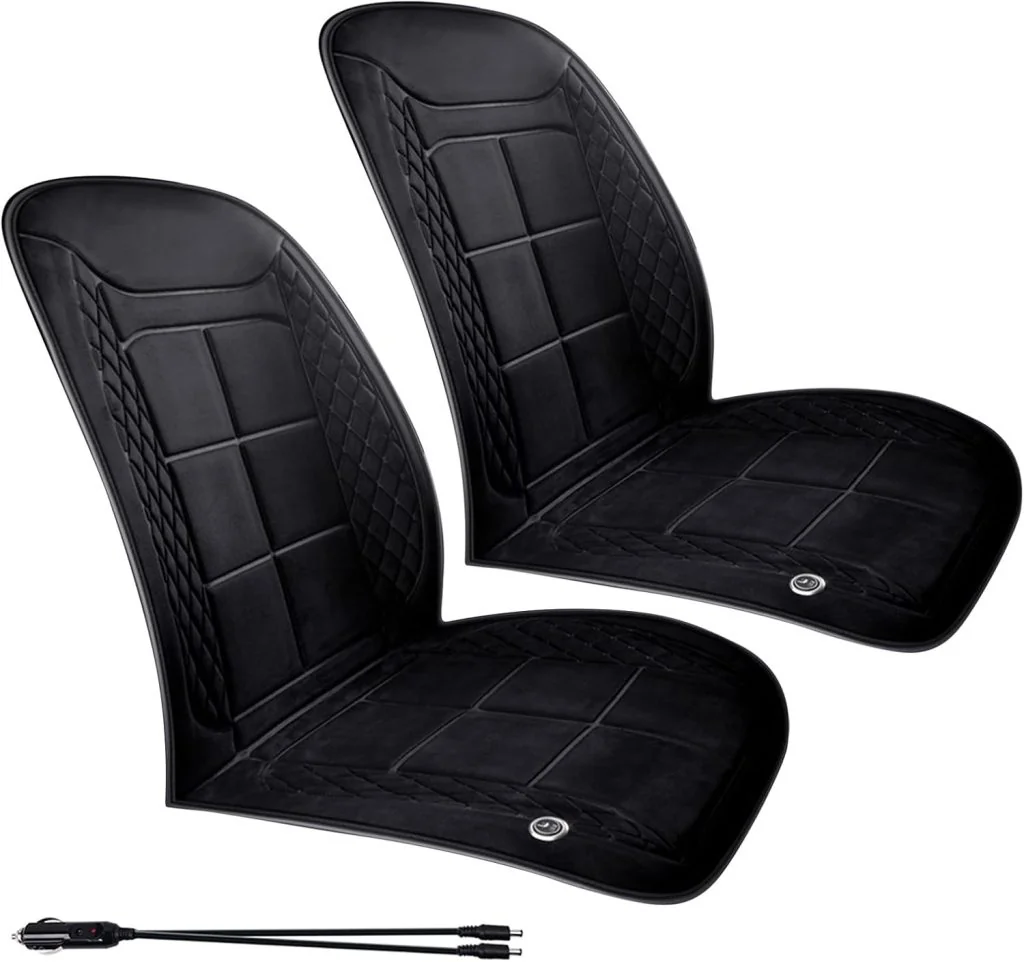
Skip the vibrating massage pads — drivers report the novelty wears off in a week and the motors die in the cold. Skip anything promising to "correct your spine" or "decompress discs"; a cushion supports, it doesn't treat. And skip the second cushion stacked on the first — if one proper support doesn't do it, the answer is positioning or a professional, not more foam.
The footnote
If you need gear
The two cushions below are the ones our seat cushion guide keeps returning to, in the $40–50 CAD range as of September 2026.
ComfiLife gel-enhanced seat cushion
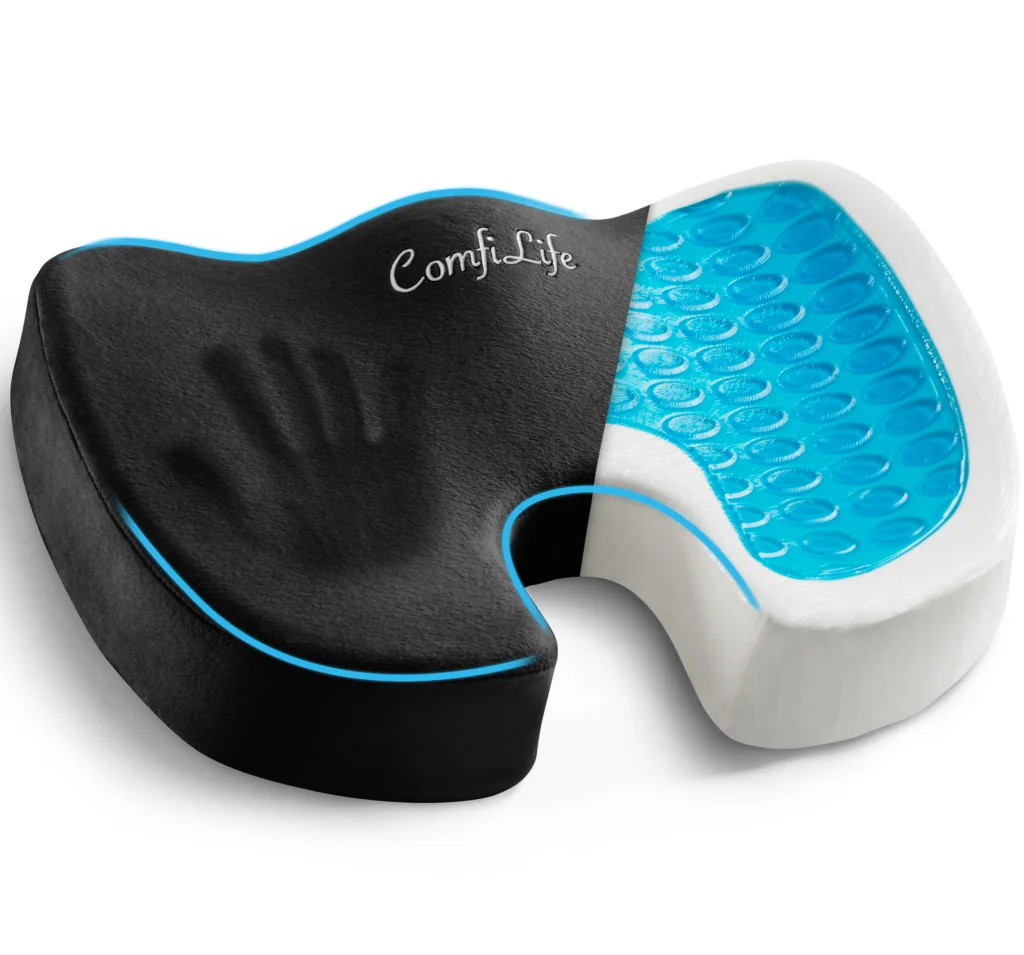
The job: lumbar contour plus cooling. The gel layer matters on warm days when plain foam turns into a heat trap against your back.
Everlasting Comfort seat cushion
The job: the same support shape without the gel, for drivers who run cooler routes or just want the lower price of the pair.
Questions
FAQ
Will a cushion fix my back pain?
It fixes the support half — the ache that builds through a driving day and eases overnight. It doesn't fix injuries, disc problems, or pain that doesn't follow the driving pattern. When in doubt, see someone qualified.
Why $40 — is the expensive stuff better?
Above this range you're mostly paying for heating elements, massage motors, or brand names — none of which address the lumbar curve. The $40–50 cushions do the one job that matters.
How do I know it's working?
Give it a full week of real driving days. The sign it's working: the end-of-day ache is duller or arrives later. No change after a week means the problem is positioning or something a cushion can't reach.